
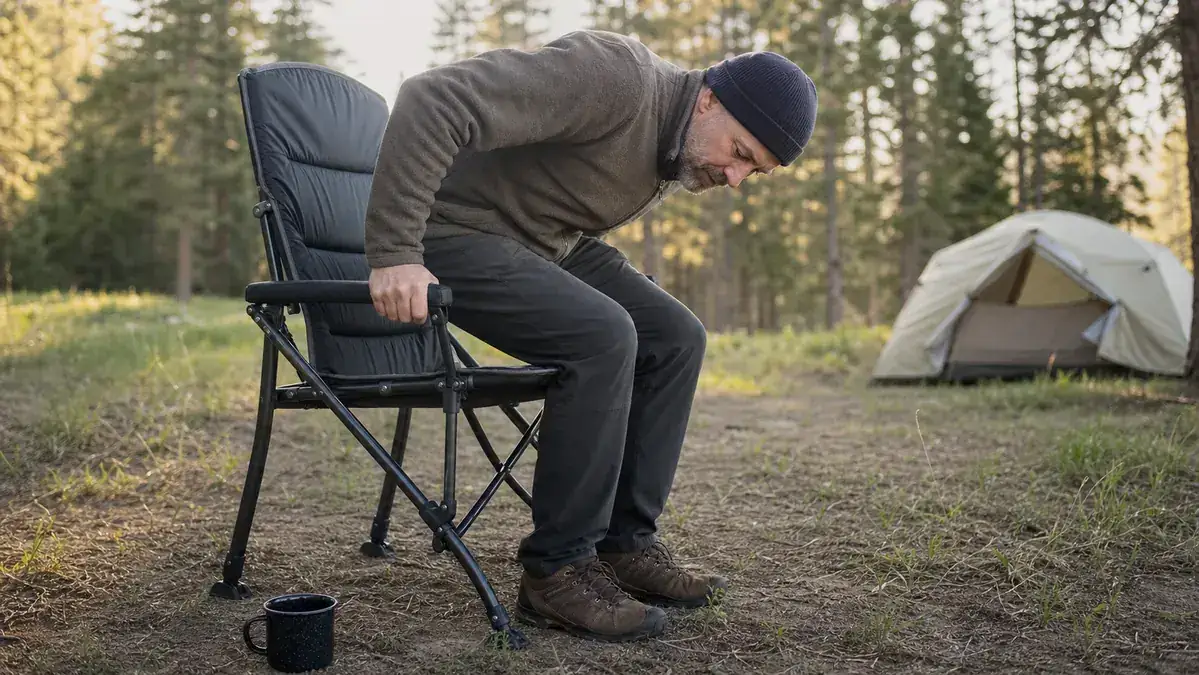
The first camp chair that ever made my back genuinely angry was a cheap low-slung beach chair I bought for six bucks at a gas station on the way to a lake trip. It sat so close to the ground that my knees ended up higher than my hips, and getting out of it after an hour meant a slow, undignified roll onto my hands and knees before I could stand. I've had two lower back strains over the years, nothing surgical, but enough that I've learned camp chairs are not all created equal when your back has opinions about how you sit. These days the chair I actually reach for is the ALPHA CAMP oversized folding chair, and figuring out why it works when so many cheaper chairs don't is what this whole guide comes down to.
This isn't a medical guide, and I'm not a doctor. It's a practical rundown of the actual chair features that matter if you deal with a cranky low back at camp: seat height, how tall the back panel is, how much the chair reclines, and how easy it is to get in and out of without a production number. If you have a diagnosed back condition, herniated disc, sciatica, or anything a doctor is actively treating, talk to your own doctor or a physical therapist about what seating setup makes sense for you specifically. What follows is just the gear side of the equation.
Stop judging a camp chair by its price tag and start judging it by seat height
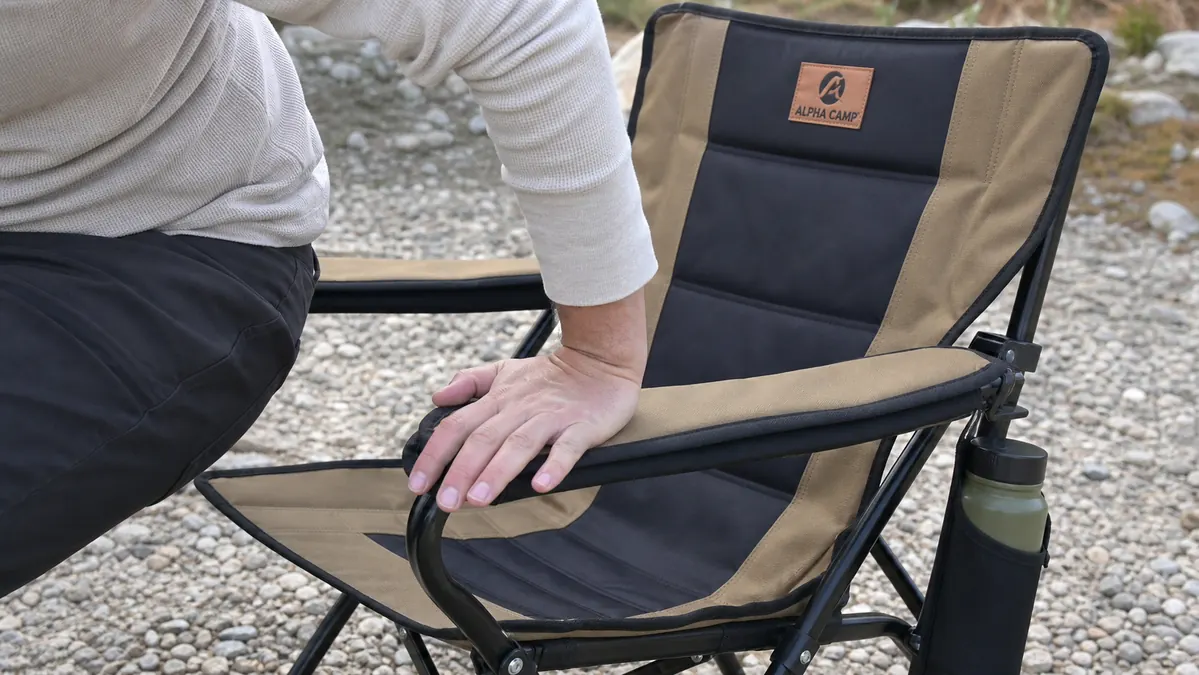
The ALPHA CAMP Heavy Duty Camping Chair sits taller than most folding chairs, with a high back and padded armrests, which is the combination that's made the biggest difference for me at camp.
Amazon Check Today's Price on Amazon →Step 1: Check the seat height before anything else
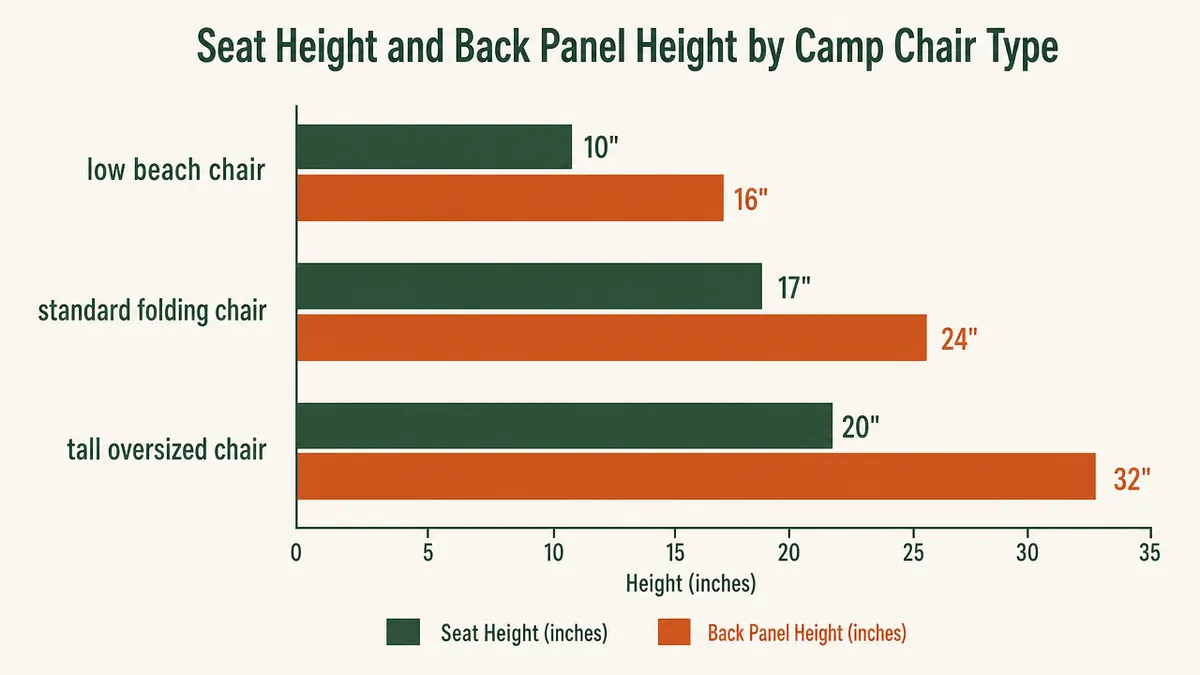
Most of the discomfort I used to blame on "just a bad camp chair" actually traced back to one number I never used to look at: seat height off the ground. A lot of budget folding chairs and nearly every low beach-style chair sit somewhere around 12 to 14 inches high. That puts your knees noticeably above your hips once you sit down, which rounds your lower back forward and makes standing back up a two-step process instead of one.
The chairs that have treated my back better sit closer to 17 to 19 inches off the ground, which puts your hips at roughly the same level as your knees or slightly above them, similar to sitting in a normal dining chair. The ALPHA CAMP oversized chair I've been using falls in that taller range, and it was the single biggest reason getting up after a long sit around the fire stopped feeling like a chore.
If a product listing doesn't give you a seat height in inches, look at photos with a person in the chair next to something you can judge scale against, like a cooler or a picnic table. A chair that puts an adult's hips clearly below their knees is one I'd skip if a bad back is part of the equation.
Before the first trip of a season, I'll unfold a new chair in the driveway and just sit in it for ten minutes while I drink coffee, still wearing whatever shoes I'd actually camp in. It sounds unnecessary, but ten minutes on flat concrete tells you more about whether a chair's seat height and back panel actually suit your back than five minutes perched on one in a store showroom ever will. If getting up off the chair in your own driveway already feels like a struggle, it's not going to feel better three nights into a trip after a full day of hiking or driving.
Step 2: Look at how tall the back panel actually is
A lot of camp chairs advertise "back support" when what they really mean is a strip of fabric that ends somewhere around your mid-back. That's fine if you're only sitting for twenty minutes to eat a sandwich. It's a different story three hours into an evening by the fire, when your shoulders start rounding forward because there's nothing behind them to lean into.
What I look for now is a back panel that reaches up past your shoulder blades, not just your lower back. The ALPHA CAMP chair's high back does this, and it's the difference between slouching forward as the night goes on and actually having somewhere to rest my shoulders when I lean back to look at the stars. A taller back panel also tends to come with a slightly reclined frame rather than a perfectly vertical one, and that small forward-to-back lean matters more than people expect.
This is also where the internal debate between an oversized chair and a compact folding chair usually gets decided for me. I laid out the fuller case for going oversized, including how much that extra back height and seat width actually matters over a season, in 10 Reasons Oversized Camping Chairs Are Worth It, and back support is honestly the reason that sits at the top of that list.
Step 3: Pay attention to the recline angle, not just whether it reclines
Recline angle is one of those specs nobody talks about until it's wrong. A chair that sits you bolt upright, closer to 90 degrees, puts a lot of pressure directly on your lower back with nothing sharing the load. A chair that reclines you way back, more like a lounger, can feel great for twenty minutes and then leave you struggling to sit forward enough to reach a plate off the table or push yourself up to stand.
The middle ground, somewhere around 100 to 110 degrees, has been the sweet spot for my own back. It's enough of a lean that your lower back isn't doing all the work holding your torso vertical, but not so much recline that standing up turns into a project. The ALPHA CAMP chair I use has a fixed recline rather than an adjustable one, and it happens to land right in that middle range, which is part of why I never found myself wishing I could change it.
If you know your back tends to prefer more upright seating some days and more reclined seating on others, an adjustable-recline chair with a lever or strap system might suit you better than a fixed-angle one. There's no wrong answer here, it's about knowing which range works for your own back and checking that a chair actually lands there before you buy it, not assuming every camp chair reclines the same amount.
Recline also interacts with what you're wearing. A rain shell or a heavier flannel changes how the same recline angle feels against your back, since extra layers add bulk between you and the fabric. The fixed recline on the ALPHA CAMP chair still feels right to me whether I'm in a t-shirt on a warm evening or bundled up on a cold one, but that's worth checking for any chair before you assume the angle that felt right in July will feel the same in October.

Step 4: Test how you'll actually get in and out of it
This is the step most people skip entirely, and it's the one that matters most day to day. A chair can have great seat height and a tall back and still be a pain if the armrests are flimsy or set too far apart to actually push off of. When my back is tight, I lean on the armrests to lower myself down slowly and to push myself back up, and a wobbly or narrow armrest takes that option away right when you need it most.
The armrests on the ALPHA CAMP chair are wide, padded, and set at a height where I can plant both hands flat and push straight up without reaching or twisting. That matters more than the cushioning on the seat itself, honestly, because a soft seat doesn't help you at all in the two moments, sitting down and standing up, when your back is doing the most work.
Frame stability plays into this too. A chair that shifts or leans slightly when you put weight on one armrest to get up is asking your back to compensate and stabilize you at exactly the wrong moment. Wide feet, a solid steel frame, and a base that doesn't rock on uneven ground all make that push-up-to-stand motion feel controlled instead of like a small gamble.
Step 5: Don't ignore the weight rating, even if you're not near it
This one surprised me. I'm not close to any camp chair's stated weight limit, but I've noticed that chairs rated well above what they actually need to hold tend to feel noticeably more stable under normal use, not just heavy use. A chair rated for 250 pounds that's holding an average adult is working closer to its limit than a chair rated for 500 pounds holding that same person, and the difference shows up as a little bit of give or flex in the frame that you feel through your lower back over a long sit.
The ALPHA CAMP chair is rated for 500 pounds, and that headroom is a big part of why it feels planted rather than springy when I shift my weight around or lean back hard. I'd rather have a chair that isn't working near its limit for me personally, since any flex in the frame tends to translate into a slight sway that makes your back work to keep you balanced instead of just letting the chair hold you.
What Else Helps
Beyond the chair itself, a few small habits have made a real difference for how my back feels by the end of a camping weekend. I get up and walk around every 45 minutes or so instead of sitting through an entire evening, since staying in one position for hours is hard on any back, chair or no chair. I also keep a small rolled camp towel or a compact lumbar cushion in the truck for chairs that don't quite hit that sweet spot on their own, tucking it into the small of my back to fill the gap if a chair's lumbar curve sits a little too high or low for me.
A short walk before you sit down for the evening helps too, even just a lap around the campsite to loosen up after a long drive. Sitting down cold, straight out of a car seat, tends to feel worse than sitting after you've moved around a little first. It's a small habit, not a fix for anything, but it's made evenings by the fire more comfortable for me without needing to change anything about the chair itself.
Setting up on level ground matters too, more than I expected. A chair sitting even slightly tilted on a slope means your spine is compensating the whole time you're sitting in it, which adds up over a long evening. I take the extra thirty seconds to find flat ground or wedge a rock under one leg before I sit down for the night, rather than after my back starts complaining about it.
If you want the fuller, no-filter version of how the ALPHA CAMP chair has held up for me specifically, including the parts of it I'd still change, I wrote that up in my honest ALPHA CAMP chair review. Again, none of this replaces an actual conversation with your doctor or a physical therapist if you're managing a real back condition. This is gear advice from a lot of nights outside, not a treatment plan.
Nobody warns you that the worst part of a bad camp chair isn't sitting in it, it's trying to get out of it three hours later.
A taller seat, a real back panel, and armrests you can actually push off of
Those three things changed how camping felt for my back more than any cushion or stretch routine did. The ALPHA CAMP chair checks all three boxes for me. Check today's price and current availability on Amazon.
Amazon Check Today's Price on Amazon →