
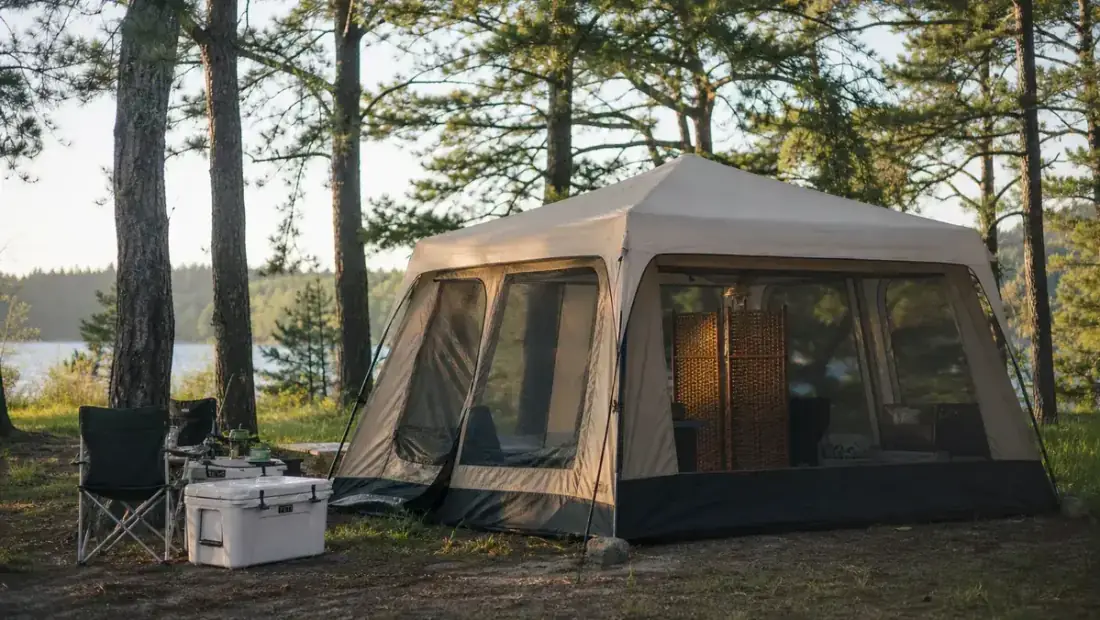
The UNP 6-Person Cabin Tent has been our main shelter for a full season now, eighteen nights across three trips: a cold April weekend in the Blue Ridge foothills where it dropped to 41 degrees overnight, a Memorial Day trip to a state park two hours from home, and a sticky August week camped near a lake with my wife and our two kids. I bought it after our old dome tent split a zipper on a rainy night and left the three of us sleeping shoulder to shoulder with wet gear piled at our feet. What I wanted this time was room to actually stand up, enough floor space for a queen air mattress plus two kids' sleeping bags, and something I could pitch myself in under fifteen minutes without swearing at guylines in the dark.
This isn't a one-weekend impression. I've now set the UNP up and taken it down close to a dozen times, in calm weather and in a genuine overnight rainstorm, and I've had time to notice which parts of the build actually matter after repeated use and which ones just look good in the Amazon photos.
The Quick Verdict
A genuinely roomy, easy-to-pitch cabin tent for family car camping. Not built for sustained high wind or ultralight backpacking, but for a weekend site with the car nearby, it's one of the better values in this size class.
Amazon Check Today's Price →Tired of crouching in a tent that fits four people if nobody moves?
The UNP cabin tent gave my family almost 6 feet of standing height and enough floor space to stop stepping on each other. Check today's price and current availability on Amazon before your next trip.
Amazon Check Today's Price on Amazon →How I've Used It
My test wasn't a lab. It was three real trips with a family that has opinions about tent life. The first outing was that cold April weekend, two adults and two kids (ages 7 and 10), where the priority was keeping everyone warm and dry overnight. The second was a three-night Memorial Day trip where I set the tent up solo to see how it went without a second pair of hands. The third was a full week in August, which is where I learned the most about ventilation, because a tent that sleeps fine at 45 degrees can turn into a sauna at 88.
Each time, I pitched the UNP on a different surface, packed dirt, mowed grass, and once on a slightly sloped gravel pad, and paid attention to how the steel pole frame handled uneven ground, how the rainfly sealed at the seams, and whether the zippers and window screens still moved smoothly by the third or fourth setup.
I also weighed the packed bag on a bathroom scale before the first trip, mostly out of curiosity, and it came in a little over 20 pounds with the stakes and guylines included. That's not a number that matters if you're loading it straight into the trunk, but it matters if your site requires a longer carry from the parking area. I wouldn't want to haul this thing more than a couple hundred yards by myself, and on the Memorial Day trip I ended up making two trips from the car rather than trying to carry the tent bag and our cooler at the same time.
By the end of the season I'd also loaned it to my brother-in-law for a separate trip, so I got a second household's read on setup difficulty and comfort. That secondhand data point matters, because it's easy for gear to feel intuitive to the person who's used it ten times and confusing to someone opening the bag cold. He called it straightforward, said the color-coded poles made the difference, and had no complaints about the instructions printed on the storage bag itself.
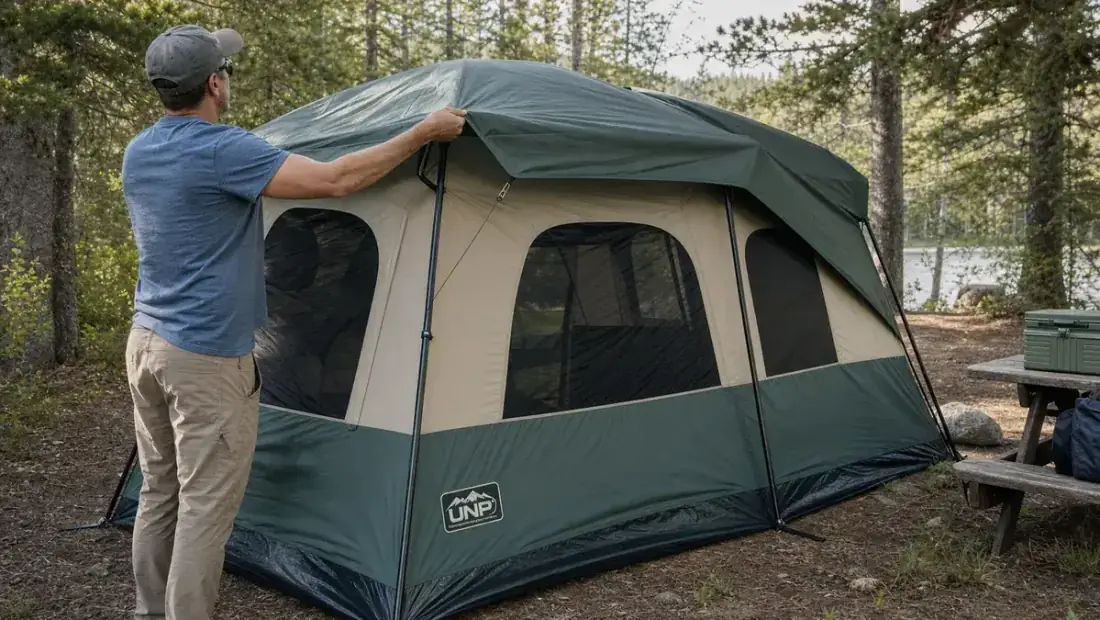
Setup and Take Down, Even After Dark
The UNP uses a pre-attached pole system, color-coded sleeves, and a hub design at the roof peak that made the first setup faster than I expected for a tent this size. Solo, on flat ground, it took me about 18 minutes start to finish, including staking out the vestibule and running the rainfly. With my wife helping, we got that down to about 11 minutes by the third trip, mostly because we'd learned which pole went where without checking the diagram.
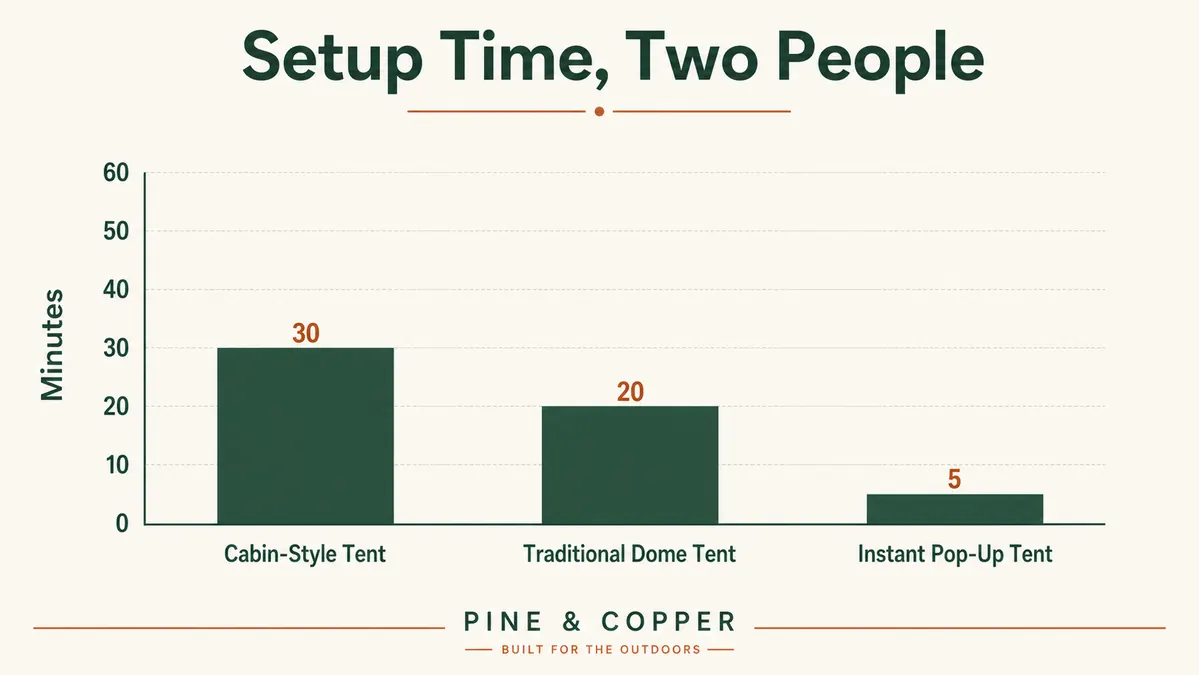
Where it got harder was the one time I had to pitch it in near-dark after we got a late start out of traffic on the Memorial Day trip. The color-coded poles helped a lot here, since headlamp light washes out subtle differences, but I still recommend doing your first setup at home in daylight before you ever try it at a site. If you're comparing setup speed against other tent styles, I put together a full breakdown in UNP Cabin Tent vs. Coleman Instant Tent, since instant tents win on raw speed but give up some of the room this one offers.
Take down is a little slower than setup, mostly because folding the poles back into their storage sleeves takes some patience the first few times. I'd budget closer to 15 minutes for a clean breakdown, including shaking out the rainfly and getting everything back into the carry bag without forcing the zipper. By the third trip this had become routine enough that my 10-year-old could handle rolling the rainfly while I dealt with poles, which is about as good a sign as any that the process isn't overly complicated.
Room to Move: Living Space for a Family of Four
This is the category where the UNP earns its keep. The near-vertical cabin walls mean I can stand fully upright almost anywhere inside, not just under the center peak like a lot of dome tents. At 6'1", I could walk from the door to the back wall without ducking, which sounds minor until you've spent a week hunched over getting dressed in a smaller tent.
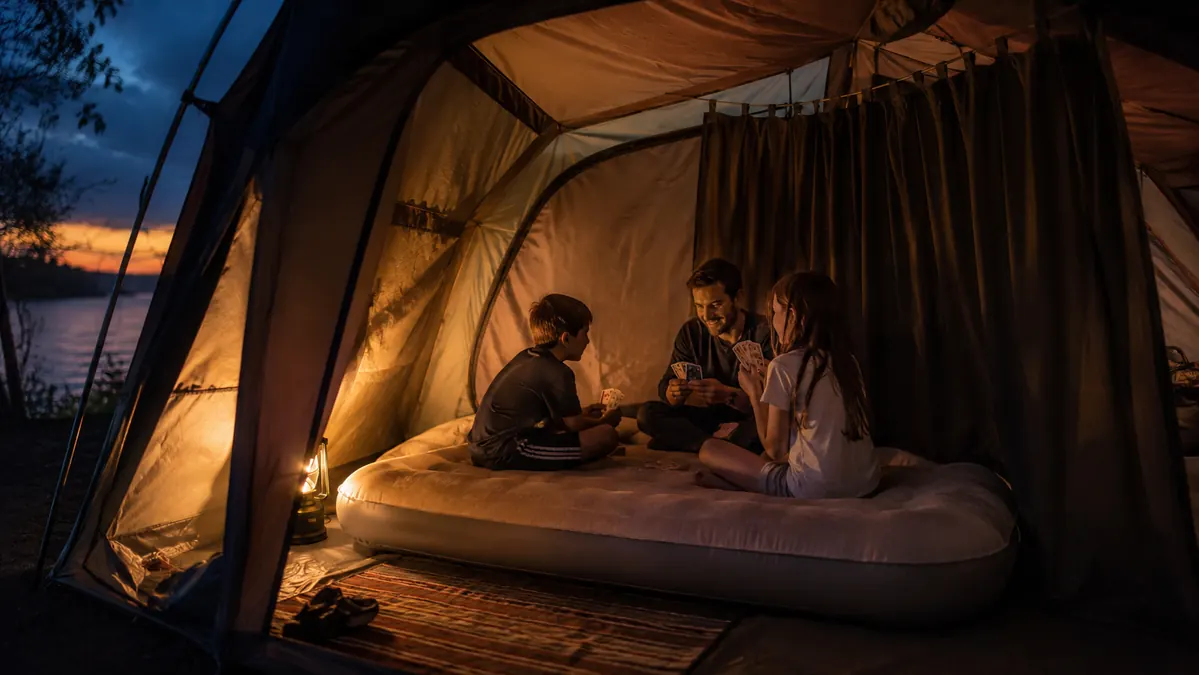
The built-in room divider curtain turned out to be more useful than I expected. On the August trip, we hung it partway across so the kids had something that felt like their own space at bedtime, even though it's really one open room. It's not soundproof or anything close, but the psychological separation mattered more than I thought it would for a 7-year-old who doesn't love sharing a room with her brother even at home.
Floor space fit a queen air mattress with room left over for two sleeping bags and a small gear pile near the door. We didn't try to squeeze in six adults, which the name suggests it can hold, and I'd caution against expecting that in practice. Six people with any real gear would feel tight. Four adults, or two adults and two kids with room to spare, is the sweet spot I found.
Ventilation and Staying Cool in the Heat
The August trip was the real test for airflow, and this is where a tall cabin tent can go either way. The UNP has large mesh windows on three sides plus a mesh roof panel under the rainfly, and with the fly's window flaps rolled up and staked open during the day, we got a decent cross breeze through the interior even on a still, humid afternoon. At night, with the rainfly fully closed against dew, it did get noticeably warmer inside than outside, which is normal for any tent this size but worth planning around if you're camping somewhere hot.
What helped most was pitching with the door facing the direction the evening breeze usually came from, something I only figured out by the third night of that trip. A small battery fan clipped to the ceiling loop made a bigger difference than I expected too. None of this is unique to the UNP specifically, but the size of the mesh panels on this tent gave us more options for managing airflow than our old dome tent ever did.
Weather: Wind, Rain, and the Rainfly
The rainfly did its job in a genuine overnight storm during the April trip, about three hours of steady rain with occasional gusts. We stayed dry, including at the seams, though I'll admit I added a bead of seam sealer to the corner stitching before that trip as a precaution, which I do with most tents in this price range regardless of brand. The factory seam tape on the UNP looked fine out of the box, but an extra layer of insurance costs very little in time or money.
Wind is where I'd set expectations lower. The tall, boxy cabin shape that gives you all that standing headroom also catches more wind than a low-profile dome. In gusts that felt like 20 to 25 mph on the Memorial Day trip, the tent held its shape fine with all guylines staked out, but I wouldn't want to test it much past that without extra stakes or a more sheltered site. If you camp somewhere consistently windy, that's worth knowing before you buy.
Durability After a Full Season
Eighteen nights isn't a decade of abuse, but it's enough to spot early wear. The zippers on the main door and the two side windows still run smoothly with no snagging. The floor, a heavier polyester than I expected at this price, showed no punctures despite one setup on a gravel pad I probably shouldn't have chosen without a footprint underneath (I added one on later trips).
The one wear point I noticed was the hook-and-loop straps that hold the rolled-up window screens in place. By the fourth or fifth use, a couple of these had started to fray slightly at the edges. They still function, but I'll be watching them over a second season to see if they need replacing. It's a small, low-cost part, and not one that affects the tent's core weatherproofing, but it's the kind of detail that separates a tent built for occasional trips from one built for weekly use.
The included stakes are stamped steel rather than anything premium, and one bent slightly on the gravel pad setup. They still held, but I picked up a set of heavier duty stakes as a cheap backup after that trip, which I'd recommend regardless of which cabin tent you buy if you expect to camp on anything harder than packed dirt.
Alternatives I Considered
Before landing on the UNP, I looked hard at instant pop-up tents for the setup speed, and at a couple of premium cabin tents that run close to double the price. The instant tents won on speed, some can be up in under five minutes, but they generally give up ceiling height and floor space to get there. The pricier cabin tents added better wind ratings and heavier-duty poles, but for a family that camps established sites a handful of weekends a year rather than chasing storms, that upgrade felt like paying for a use case we don't have.
I wrote up the closest head-to-head in more detail if you want the side-by-side numbers, including our real setup times and floor space measurements, in this comparison against a popular Coleman instant tent. And if you're still weighing cabin tents against traditional dome tents in general rather than one specific model, I broke down the tradeoffs in 10 Reasons Cabin Tents Beat Dome Tents. If you want the shorter, more blunt version of everything above, including a few gripes I didn't dwell on here, I also wrote a separate no-frills honest review that leans harder into the tradeoffs.
What I Liked
- Full standing headroom through most of the interior, not just the center
- Setup dropped to about 11 minutes with two people after a few practice runs
- Room divider curtain gives kids a sense of separate space
- Held up dry through a real three-hour overnight rainstorm
- Large mesh windows give real airflow options in warm weather
- Solid value for the floor space compared to similarly sized cabin tents
Where It Falls Short
- Window screen velcro straps started fraying by the fourth or fifth setup
- Catches more wind than a low-profile dome tent in gusts above 20-25 mph
- No footprint included, and the floor benefits from one on rough ground
- Included stakes are basic stamped steel, one bent on a gravel pad
- Genuinely comfortable for four with gear, not six despite the name
- Packed bag is bulky and awkward for one person to carry any real distance from the car
The first morning I stood up straight inside a tent without hitting my head on the ceiling, I understood why cabin-style tents cost a little more than the dome tent I grew up using.
Who This Is For
This tent makes the most sense for families or small groups who car camp at established campgrounds, where you're parking within a short carry of the site and not hiking in. If standing headroom, a family-sized footprint, and reasonably fast setup matter more to you than shaving ounces or wind-proofing for exposed ridgelines, the UNP fits that brief well. It's also a good pick for anyone upgrading from a cramped dome tent who wants more livable space without jumping to the premium end of the cabin tent category.
Who Should Skip It
If you're backpacking, or you regularly camp somewhere with sustained strong wind, exposed coastal sites or high desert with few windbreaks, this isn't the right shape of tent. Look for a lower-profile dome or geodesic design built for those conditions instead. I also wouldn't recommend it to anyone who genuinely plans to sleep six adults inside. Two adults and two kids, or four adults with gear, is the realistic capacity, and going in expecting a literal six-person sleepover will leave you disappointed on night one.
If eighteen nights of testing sold you, don't wait to check the price
Family cabin tents like this one move in and out of stock heading into peak camping season. See today's price and shipping window on Amazon before you plan your next trip around it.
Amazon Check Today's Price on Amazon →