
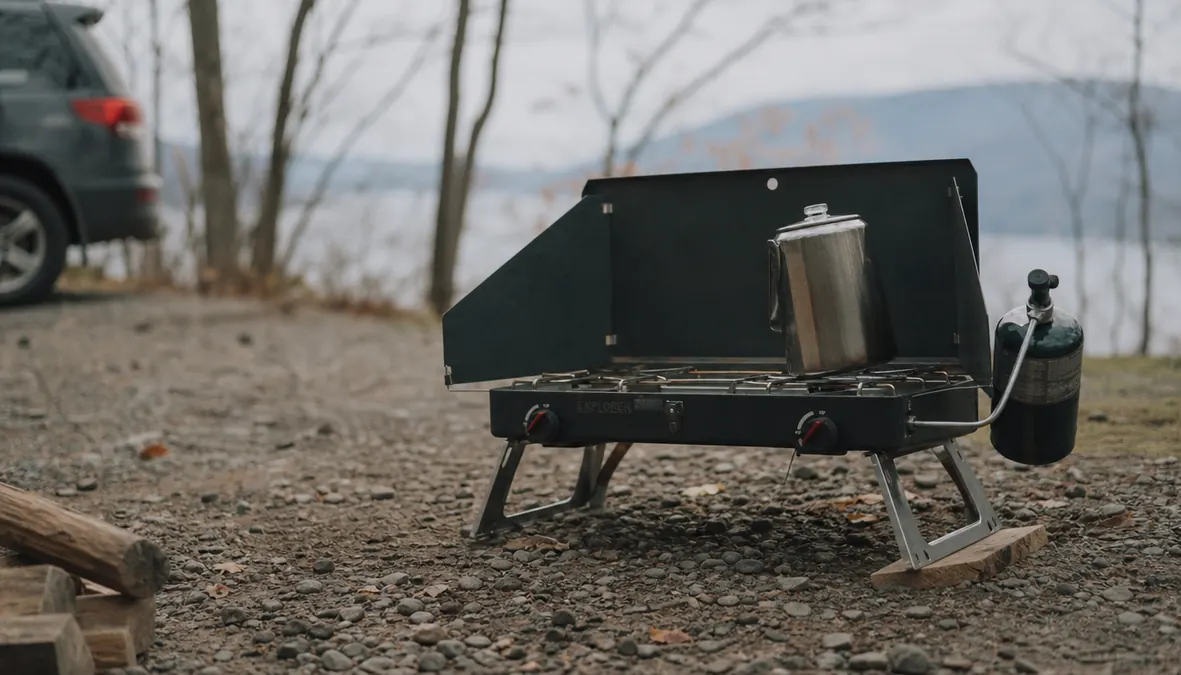
Most reviews of the Gas One Double Burner Propane Stove read like a highlight reel: two big burners, a stainless body, a fair price. What those reviews tend to skip is the stuff you only learn after you've hauled the thing to a dozen different campsites and had a few small things go sideways. I've used this stove for two full seasons now, everywhere from a gravel pull-off above the Current River in Missouri to a windy bluff campground on Lake Superior's south shore, and I want to spend this review on what nobody tells you before you buy it.
This isn't a takedown. I still own the stove, and it's still the one that rides in the truck bed most weekends. My other review on this site covers the season-long highlights and the good meals it's cooked. Here I want to go harder on the parts that trip people up once the honeymoon wears off: a hose that's shorter than it should be, legs that don't love uneven ground, a case latch that doesn't always hold, and a couple of design choices you only notice after enough repetitions to see the pattern.
None of what follows is meant to scare you off the stove. I'd still recommend it to a lot of car camping families, but only with realistic expectations set up front. I've read complaints online from buyers confused about problems that would have been a five minute fix if someone had mentioned them ahead of time, and closing that gap is the whole point of this review.
The Quick Verdict
Still a solid double burner stove for the money, but budget for a longer hose, a leveling trick for the legs, and real grate maintenance, because the spec sheet doesn't mention any of that.
Amazon Check Today's Price →Before you buy the Gas One stove, read what the spec sheet leaves out
Two 15,000 BTU burners and a stainless body sound great on paper. Here's what actually happens once you've used it at a dozen real campsites, plus how to check today's price and current stock before you decide.
Amazon Check Today's Price on Amazon →How We Tested It
I didn't just cook one good meal and call it a review. Over two camping seasons I ran this stove at nine different sites: state park campgrounds with concrete pads, a gravel forest service site with no flat ground anywhere, a windy bluff site above Lake Superior, and a friend's backyard when I was dialing in a new pancake recipe before a trip. I logged setup time, ignition attempts, how level the stove sat, and what broke or annoyed me at each one.
I was specifically hunting for the stuff a one-week rental review misses. Anyone can tell you a stove boils water fast on a calm morning on flat ground in a backyard. I wanted to know what happens on the third trip, the fifth trip, and the trip where the ground isn't cooperating and the wind won't quit.
That approach is why this review reads differently than the glowing five-star reviews you'll see under the Gas One listing on Amazon. Most of those are written after one or two trips, before the small annoyances have had a chance to show up at all.
The Hose Is Shorter Than the Photos Suggest
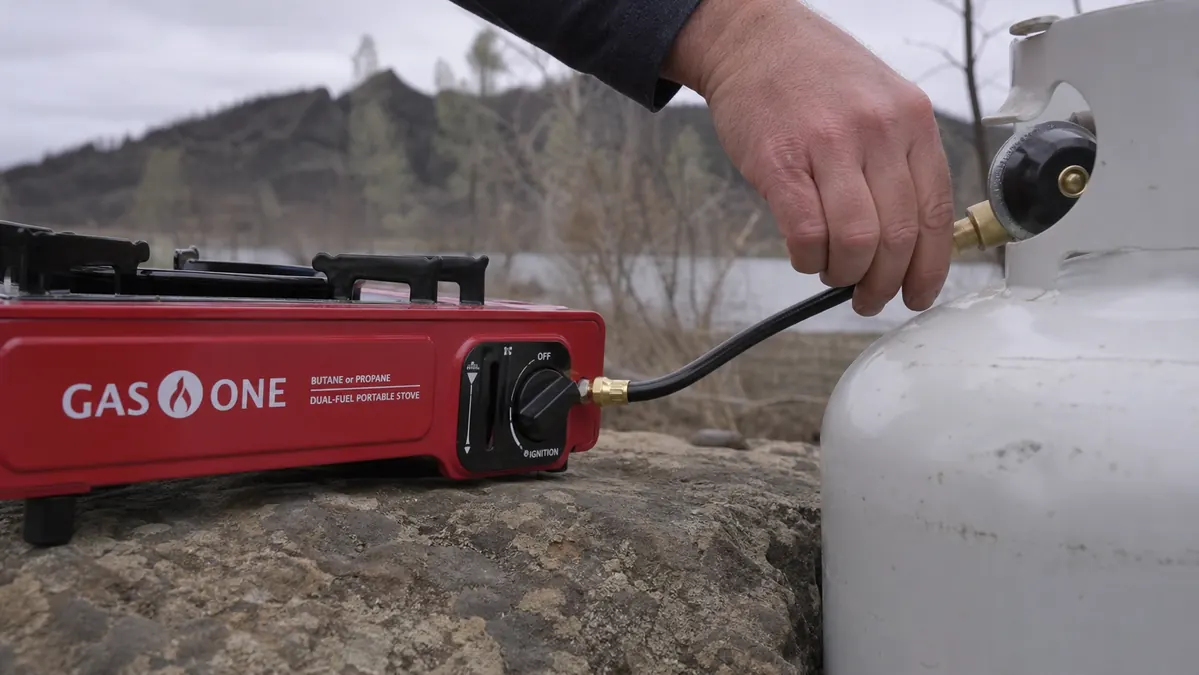
The included regulator hose runs about three feet from the stove to the tank connection. That's fine if you're using one of the small one pound canisters sitting right next to the stove, but if you're running a 20 pound tank the way I do, three feet puts the tank close enough to the cooking surface that I don't love it, especially with kids running around the picnic table.
I ended up buying a separate five foot extension hose to put real distance between the flame and the tank, which is an extra fifteen to twenty dollars nobody mentions in the box copy. It's not a dealbreaker, but if you're budgeting the Gas One as a complete kit against a stove that ships with a longer hose, add that line item before you assume it's the cheaper option.
The hose itself has held up fine mechanically, no cracking or stiffness after two seasons, but I do check the fitting at the tank every time now, because a short hose run near a heat source is exactly the kind of thing you want to double check rather than assume is fine.
Legs, Latches, and the Small Fit Problems
The folding legs are not adjustable. On a flat concrete pad or a level picnic table, that's a non-issue. On the gravel forest service site I mentioned, or on a sloped dirt pad at a state park outside Custer, South Dakota, the stove rocked slightly no matter how I positioned it, and I ended up shimming one leg with a flattened tin can lid to keep a pot from sliding toward the edge.
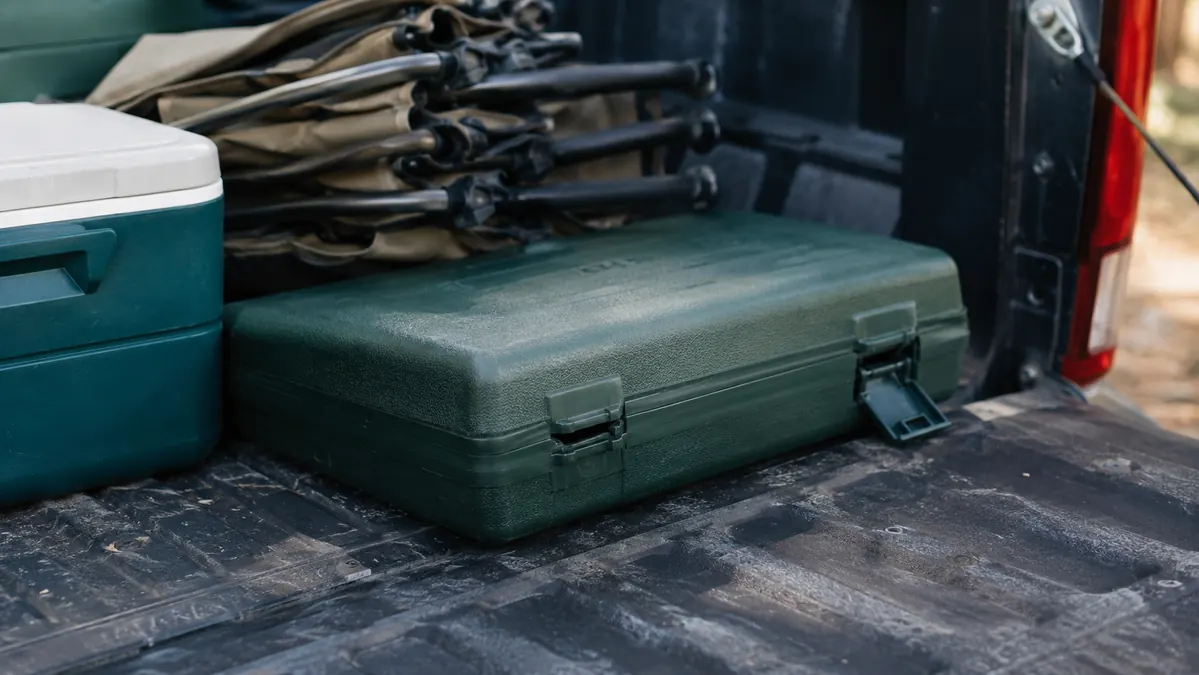
The hard case latches are the other small thing nobody warns you about. Twice now, one of the two latches has popped open in transit, once in the truck bed and once when I set the packed case down harder than I meant to on a tailgate. Nothing fell out either time because the case stayed mostly closed, but it's not the confidence-inspiring click you'd want from a case you're tossing around at every trip.
None of this is a design failure exactly, it's more that Gas One built a stove for cooking, and the transport hardware feels like it got less attention than the burners did. If you camp mostly on flat ground and you're gentle with your gear in transit, you may never notice either issue. If you camp the way I do, rough sites and a truck bed, you'll run into both eventually.
I've also noticed the legs themselves pick up small dents and scuffs faster than the stainless top does, since they're the part making direct contact with rocks and uneven pavement at every setup. It's cosmetic more than functional so far, two seasons in, but if you like your gear looking close to new, this is the part that will show wear first.
Where the BTU Number Doesn't Tell the Whole Story
30,000 combined BTU sounds impressive, and it is genuinely strong heat. But the burner heads on this stove are spaced wide enough that a single small pot, like a one cup percolator or a small saucepan, doesn't always sit stable on the grate. I've had a small percolator wobble and nearly tip while I was pouring, because the grate is really built with a full size pan or a wide pot in mind.
The other thing that surprised me: on full blast, the right burner on my unit runs hot enough that thin nonstick pancake griddles will scorch the edges of the batter before the center sets, if you're not watching closely and adjusting down. That's not unique to Gas One, most high output camp burners do this, but a lot of buyers assume 15,000 BTU per burner means gentle control at every setting, and it doesn't. You have to actively manage it for delicate food, the same way you would on a powerful home range.
None of this means the heat output is a problem. For searing a burger patty or getting a big pot of chili moving fast, it's exactly what you want. It just means the stove rewards a cook who's paying attention over one who wants to walk away and check back in ten minutes.
Replacement Parts Aren't Always Easy to Find
When the ignition switch on one of my burners started sticking near the end of last season, I went looking for a replacement piezo igniter, or at least an official repair kit, directly from Gas One. What I found instead was a scattered mix of generic camp stove parts on third party sites, none of them confirmed as an exact match, and no clear parts page on the manufacturer's own site.
I ended up fixing the problem myself with a basic butane lighter as a permanent backup rather than chasing down an official part, which works fine day to day but isn't the answer you want if you're hoping to keep the Gas One running for five or six seasons the way you might with a name brand grill you can order parts for at any hardware store.
If a broken igniter or a cracked knob would send you straight back to the return window rather than a five dollar part, that's worth knowing before you buy. This stove is easy enough to keep running with basic workarounds, but it doesn't come with a robust parts ecosystem behind it the way some of the bigger camping brands do.
The Maintenance Nobody Mentions in the Five Star Reviews
The cast iron grates need real care, and I don't think most first time buyers grasp how much until they've left them out overnight once. Mine picked up a light film of surface rust after a damp night at that Lake Superior site, and it took steel wool and a coat of oil to bring them back. That's maintenance, not damage, but it's ongoing maintenance, every single trip, not a one time seasoning step.
The regulator connection is the other thing I'd flag. After I left the stove assembled in my garage over a humid month between trips, I noticed light corrosion starting at the brass fitting where the hose meets the tank valve. A quick wipe and inspection fixed it, but it told me this isn't a stove you want to leave hooked up and stored as-is between uses. Disconnect it, dry it, and store the hose separately.
I'd also flag that the printed manual is thin on specifics for any of this. There's no dedicated section on humidity storage or hose inspection intervals, just general safety language telling you to run the stove outdoors in open air away from tent walls and flammable gear. Everything I've described in this review came from trial and error rather than anything Gas One printed, which is exactly why I wanted to write it down.
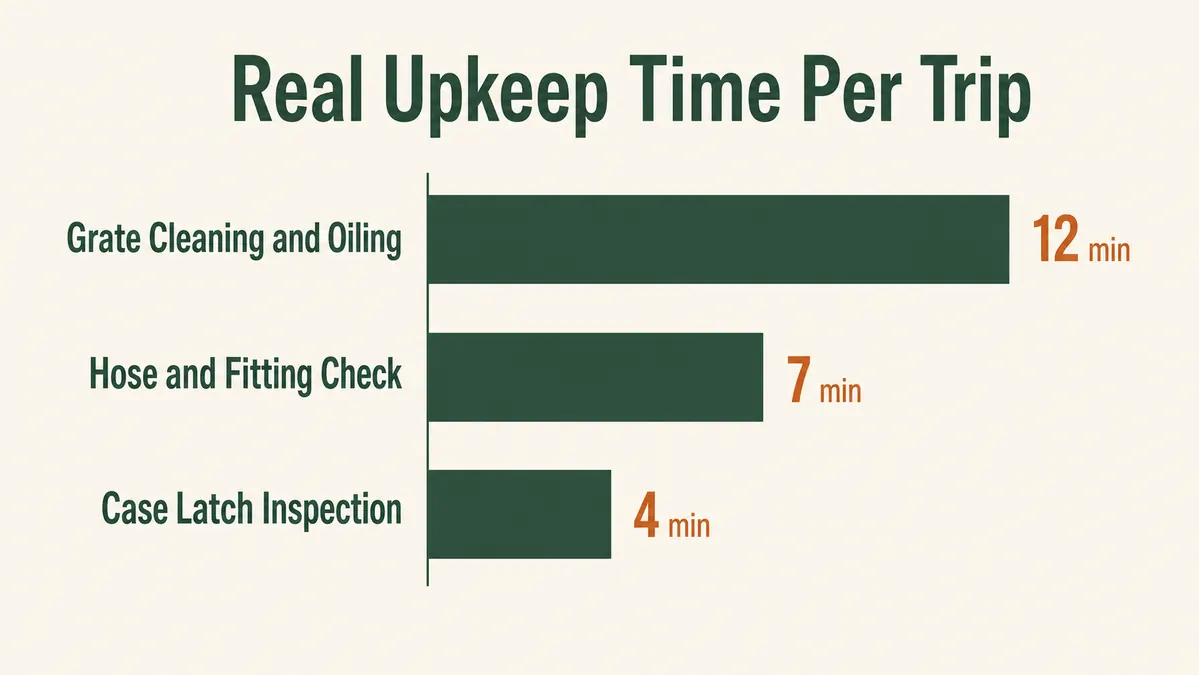
Add it up and the real time cost of owning the Gas One stove is more than the ten minutes of cleanup I mentioned in my other review. Between the grates, the hose fitting check, and the occasional latch inspection, I'm spending closer to fifteen or twenty minutes per trip on upkeep. That's still reasonable for what you get, but it's not the wipe-and-go experience the marketing photos imply.
What I Liked
- Genuinely strong heat output, both burners together will outcook most single burner setups
- Runs off a full 20 pound tank so you're not swapping small canisters mid-meal
- Stainless housing has survived two seasons of truck bed abuse without a dent
- Independent burner control really does let you run two different dishes at once
Where It Falls Short
- Included hose is only about three feet, expect to buy a longer one for tank placement you're comfortable with
- Folding legs aren't adjustable, uneven ground means shimming or accepting a slight wobble
- One of the case latches has popped open in transit twice over two seasons
- Cast iron grates and the hose fitting both need real, repeated maintenance, not a one-time step
- Small pots and percolators can feel unstable on grates spaced for full-size cookware
- Replacement parts aren't sold directly by Gas One, so a broken igniter means improvising rather than ordering a part
Nobody puts 'buy a longer hose' in the bullet points, but that's the first thing I'd tell a friend before they hit order.
Who This Is For
This stove still makes sense for family car campers who want real cooking power and don't mind a little upkeep between trips. If you're comfortable buying a longer hose, you camp mostly on reasonably flat ground, and you're willing to spend fifteen minutes on grate and hose maintenance after each trip, the heat output and the two-burner flexibility are worth the tradeoffs. If you want the full rundown on what it's like across a whole season of good meals, that's in my long-term Gas One stove review, and if you're trying to decide between one burner and two, I laid out the case in 10 reasons a double burner stove beats a single burner.
Who Should Skip It
Skip this one if you camp mostly on rocky, sloped, or otherwise uneven ground and won't want to deal with shimming a leg every trip. Skip it too if you want a stove you can leave connected and stored between uses without a second thought, because the regulator fitting wants to be disconnected and dried. And if a big chunk of your cooking is small pots, a single percolator, or delicate items like thin pancakes, you'll be fighting the grate spacing and the aggressive heat more than you'd like. If you want to see how it actually compares against a name brand alternative before you decide, I put it head to head in Gas One vs. Coleman Triton, and if you want the practical side of getting real meals out of a two burner setup, how to cook full meals at camp with a stove covers that in detail.
Know the tradeoffs, still want the heat output?
Two 15,000 BTU burners on a full 20 pound tank still beats babysitting a single burner stove, as long as you plan for the hose length and the grate care. Check today's price and current stock on Amazon.
Amazon Check Today's Price on Amazon →