
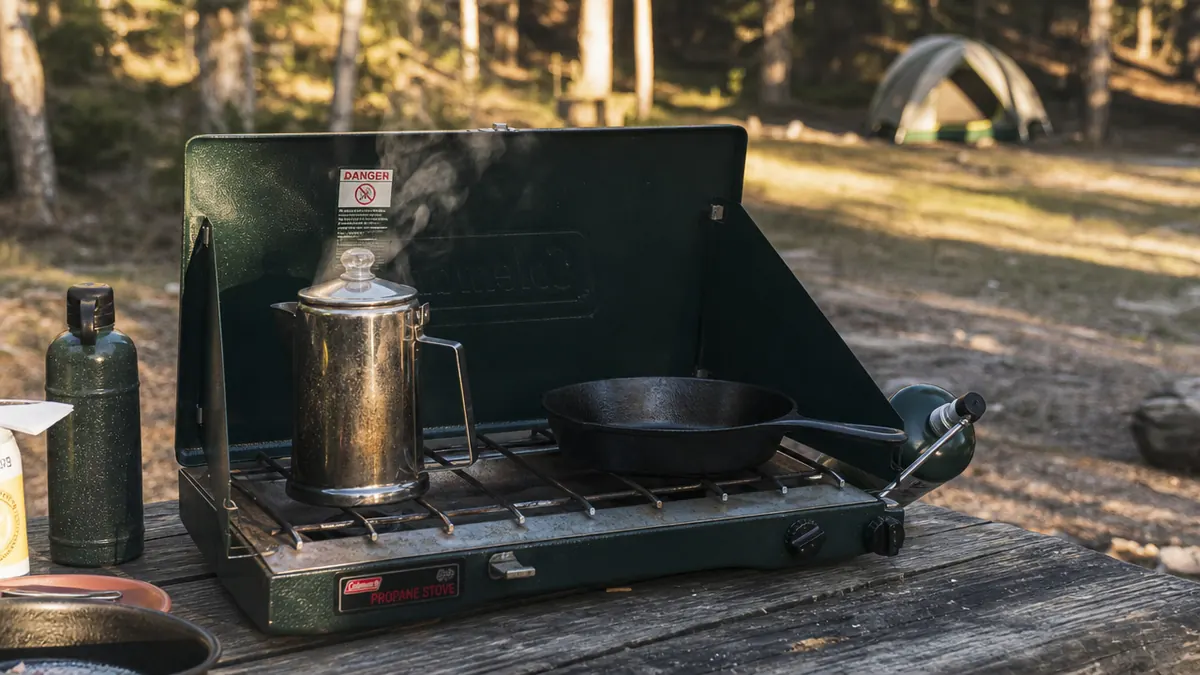
Three summers ago I burned through a single burner butane stove trying to cook eggs, bacon, and a pot of coffee at the same time for four people at a state park outside Ludington, Michigan. Something always went cold while something else finished. That exact problem is what pushed me toward a two burner setup, and after a full season of weekend trips and one week long stretch at a lake, the Gas One Propane Double Burner is the stove that has stayed bolted onto my truck's tailgate rig ever since.
I'm not a backcountry guy. I drive to my campsites, I bring a cooler and real skillets, and I cook actual meals instead of just rehydrating a bag. That's the lens this review comes from. I ran the Gas One stove through roughly two dozen nights of cooking across five months, in calm weather, in wind, and in mornings cold enough that my hands didn't want to work the knobs.
The Quick Verdict
A genuinely solid two burner stove for family car camping that cooks real meals fast, with a couple of small annoyances I've made peace with.
Amazon Check Today's Price →Tired of choosing between hot eggs and hot bacon?
The Gas One double burner lets you run two full-size pans at once instead of babysitting one burner while the other dish goes cold. Check today's price and current availability before your next trip.
Amazon Check Today's Price on Amazon →How I've Used It
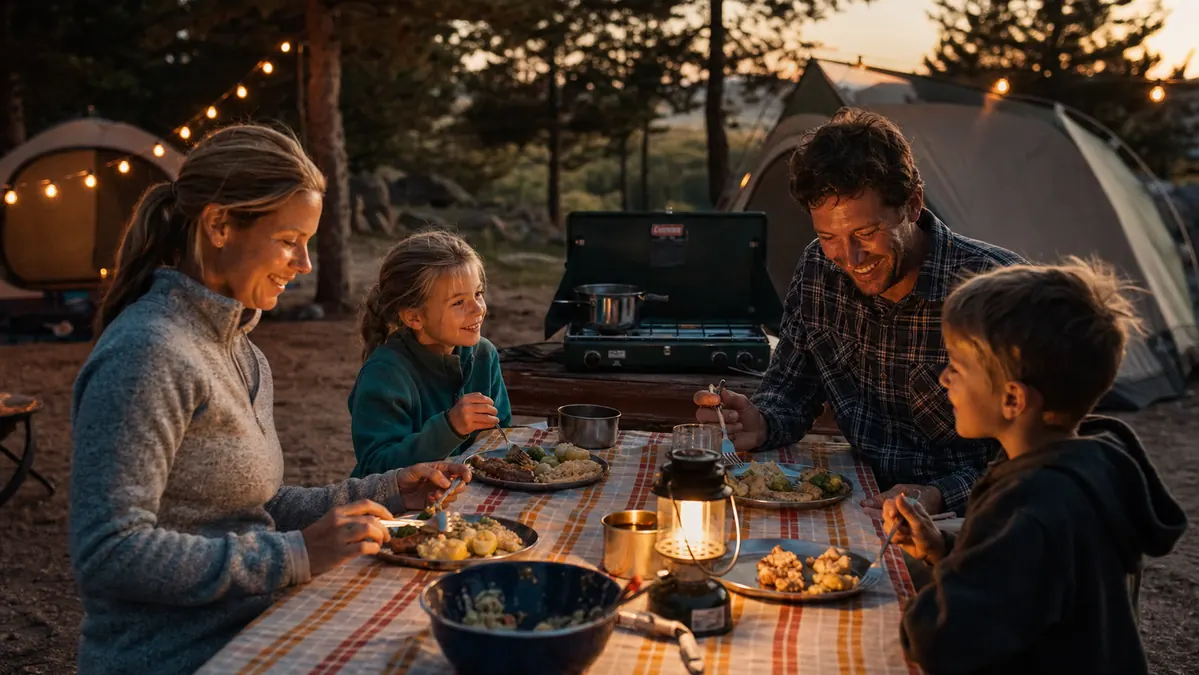
This stove has been to a state park campground twice, a gravel trailhead lot for an overnight fishing trip, and a week long family reunion at a rented lake cabin site where I was cooking for six people twice a day. That last trip is where a double burner actually earns its keep. I was running a full skillet of hash browns on one side and a pot of oatmeal on the other, then swapping to a pan of burgers and a pot of corn on the cob that evening.
Over the season the meal list got pretty long: French toast and sausage links on a Saturday morning, a pot of chili simmering for two hours while the other burner handled grilled cheese for the kids, corn on the cob and burgers on a Fourth of July trip, and more pots of camp coffee than I bothered counting. None of that would have worked on a single burner without a rotation of cold food waiting its turn.
For fuel, I've run the Gas One stove almost exclusively off a 20 pound propane tank using the hose and regulator it ships with, rather than the small screw-on canisters some campers use with similar stoves. That's the setup I'd point most car campers toward if you want to actually cook full meals at camp instead of just boiling water for freeze-dried pouches, because a 20 pound tank lasts an entire trip without swapping canisters mid-meal.
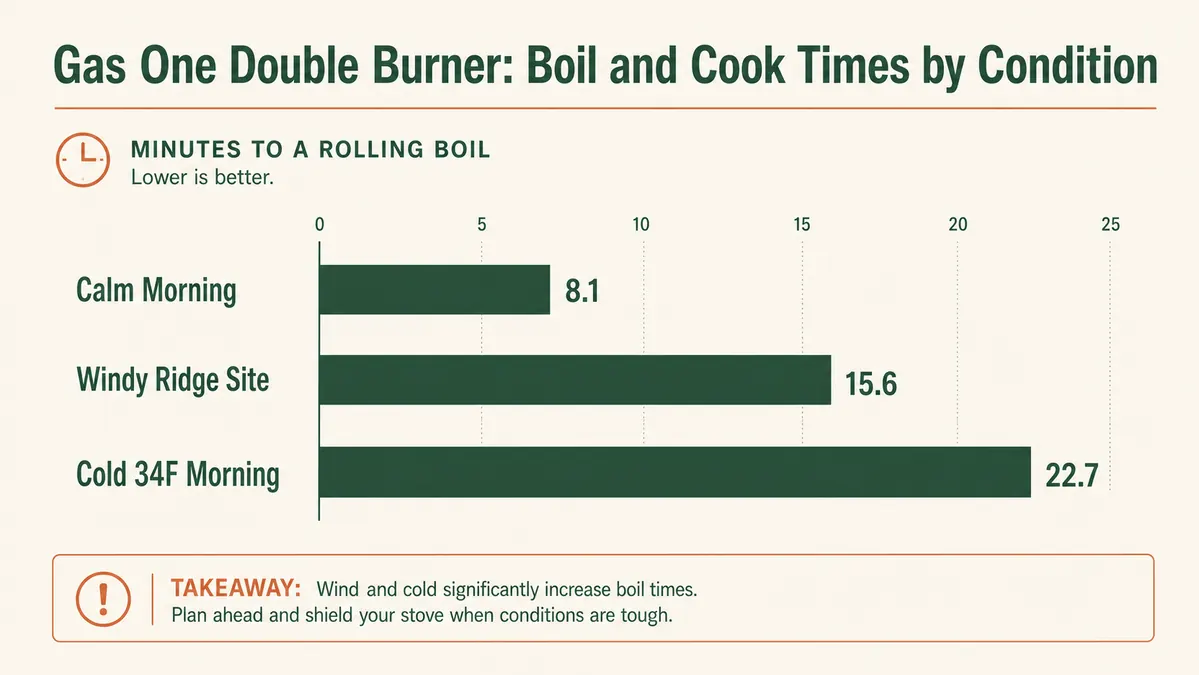
I've cooked on it in a light drizzle under an awning, in a stiff crosswind off a lake, and on a 34 degree morning where I genuinely needed the heat output just to feel like breakfast was worth getting out of the sleeping bag for. It has not let me down on any of those mornings, though the wind did slow me down once, which I'll get into.
Heat Output and Running Two Burners at Once
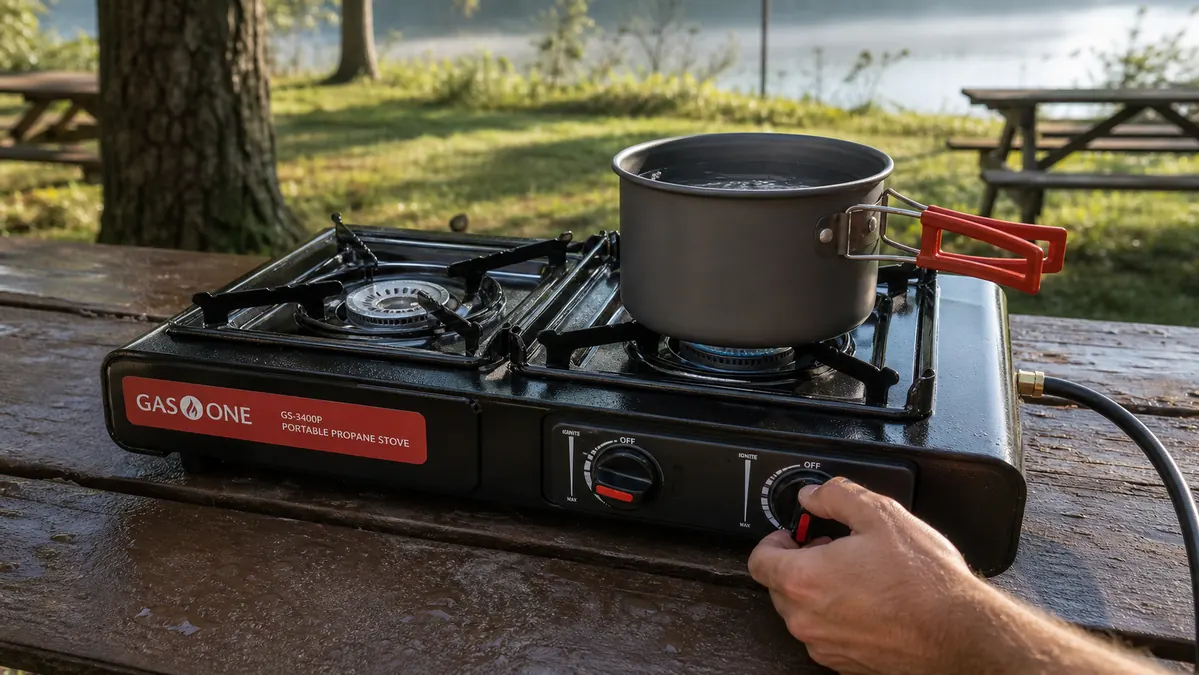
Each burner on the Gas One stove is rated at 15,000 BTU, so you're looking at 30,000 BTU combined if you're running both wide open, which is more than most single burner backpacking stoves and roughly in line with a home stovetop burner on high. In practice that means a full pot of water gets to a rolling boil in around six or seven minutes on a calm morning, and a cast iron skillet gets hot enough to sear a burger patty properly rather than just steam it gray.
The two burners run off separate control knobs, so you can have one side simmering a pot of chili on low while the other side is on high finishing off a skillet of eggs. That independent control is the whole reason I bought a double burner stove in the first place, and it's held up exactly the way I hoped across a full season of use.
I tested the low end on purpose one evening, holding a small pot of red sauce at a bare simmer for close to an hour while the other burner cycled between eggs, then toast pans, then cleanup water. The sauce never scorched and never fully stopped bubbling, which told me the low setting on the right burner at least is dialed in well enough to trust with something that actually needs babysitting.
The one place heat output gets uneven is when both burners are maxed at once in any kind of breeze. The built-in wind panels on the Gas One stove help, but they're not tall enough to fully block a steady crosswind coming off open water. On our windiest lake trip, the outer burner's flame got knocked around enough that boiling time roughly doubled until I repositioned the whole stove with its back to the wind.
Build Quality After a Full Season Outdoors
The body is stamped stainless steel with a matte finish, and after a season of being loaded in and out of a truck bed, it still looks like a stove I've used hard rather than one I've babied. No dents, no cracked plastic knobs, nothing loose on the hinges that fold the wind panels flat for storage.
The cast iron grates are the one part that need actual maintenance. Cast iron rusts if you pack it up wet, and I learned that the hard way after leaving the grates out overnight in dew without wiping them down. A quick scrub with steel wool and a light coat of cooking oil fixed it, but if you're not someone who already tends cast iron at home, budget a few extra minutes at the end of each trip or you'll watch surface rust creep in by midsummer.
The folding legs and latch that hold the whole unit closed for transport have stayed tight through every pack-up and unpack. Gas One clearly built the housing to survive being tossed in a truck bed next to a cooler and a box of firewood, which is exactly the kind of abuse a family camping stove actually takes.
Setup, Ignition, and Packing It Down
Setup is genuinely fast. Unfold the legs, flip up the wind panels, connect the hose to your propane tank, and you're cooking in under two minutes once you've done it a couple times. The piezo ignition works with a simple push and turn on most mornings, though on that 34 degree morning I mentioned, it took three or four clicks before the spark caught. A lighter in your pocket as a backup isn't a bad habit regardless of what stove you own.
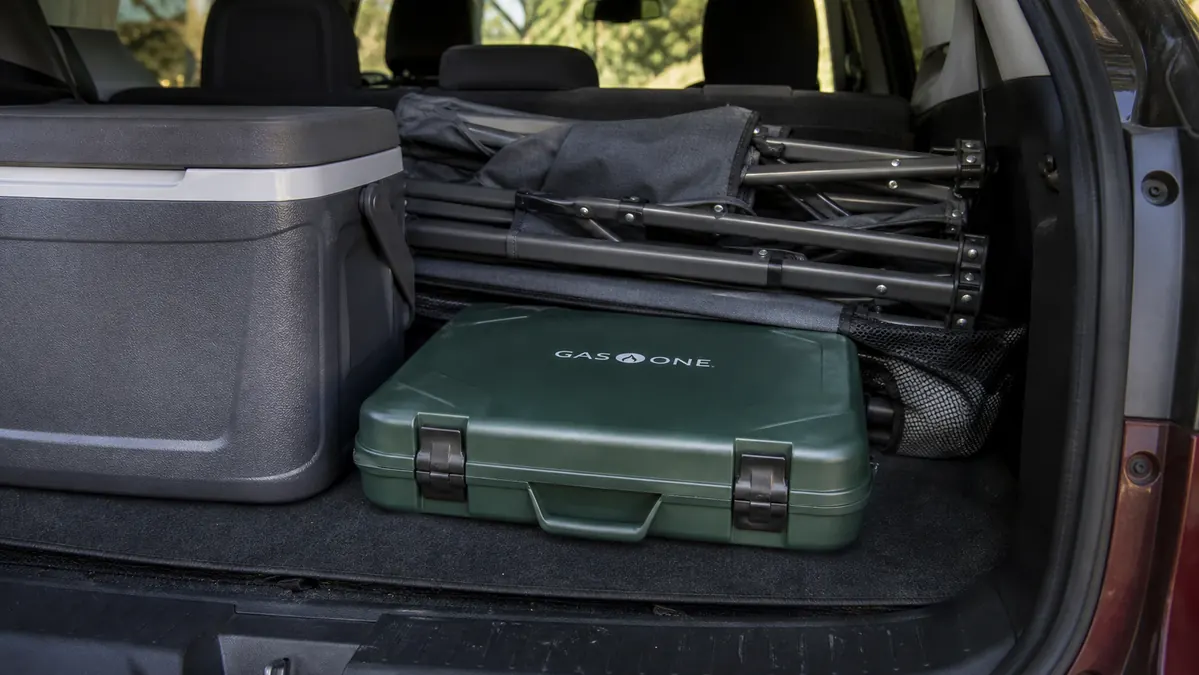
Packed down, the stove folds flat into a hard-shell case with a carrying handle, weighing somewhere in the 14 to 16 pound range depending on which scale in my garage I trust that day. It's not something you'd want to hike in with, but for loading into an SUV or truck bed alongside a cooler and camp chairs, it's an easy one-hand carry from the tailgate to the picnic table.
One safety note that applies to this stove or any propane camp stove: run it outdoors in open air only, never inside a tent, camper interior, or any enclosed space. Propane combustion uses up oxygen and produces carbon monoxide, and enclosed spaces don't ventilate that away fast enough. Set it up on a stable, level surface away from tent walls and flammable gear, and keep the propane tank connection checked for a tight seal before you light it.
Cleaning It Between Trips
My routine after every trip is short: let the grates cool completely, scrape off anything stuck with a plastic putty knife rather than metal so I don't scratch the porcelain-style finish, wipe the burner heads with a dry cloth so nothing rusts overnight, and give the cast iron grates a light coat of oil before they go back in the storage bag. That whole process takes about ten minutes and it's saved me from any real corrosion beyond that one early mistake with the dew.
I'd also recommend checking the hose connection for cracking or wear once a season, the same way you would with a home gas grill. Mine still looks factory fresh after a full year, but propane hoses are the one part I'd replace without hesitation the moment it looked questionable rather than pushing my luck.
Where the Gas One Stove Falls Short
The wind panels are decent but not tall enough for genuinely exposed sites. If your usual campsite is a ridge line or an open lakeshore with steady wind, you'll want to plan your stove's orientation relative to the wind every time, or bring an extra windscreen. It's a real limitation, not a dealbreaker, but it's the single biggest complaint I have after a full season.
Fine simmer control on the left burner has felt slightly less precise than the right one on my unit, dropping food from a gentle simmer to nearly out with what feels like a small knob adjustment. It hasn't ruined a meal, but if you're someone who simmers sauces for a while, you'll notice it and compensate by checking more often.
And as I mentioned, the cast iron grates need real maintenance. If you're the type of camper who wants to hose everything off and toss it in the truck without a second thought, that's a genuine mismatch with this stove, and it's worth knowing before you buy rather than after your grates show their first rust spots.
How It Stacks Up Against Other Stoves
I get asked a lot whether a two burner stove is worth the extra bulk over a single burner setup, and after cooking real meals for a family all season, my answer is yes for anyone feeding more than two people. I laid out the specific reasons in 10 reasons a double burner stove beats a single burner at camp, but the short version is that you stop rationing your cook time.
The other question I get is how the Gas One compares against the bigger name brand stoves campers already know. I put it head to head against a Coleman two burner in Gas One vs. Coleman Triton, and the differences come down to heat output, wind performance, and price rather than one being outright better across the board.
What I Liked
- Two independently controlled 15,000 BTU burners, real side by side cooking
- Runs off a 20 pound propane tank so fuel lasts a full trip
- Stainless steel housing held up to a season of truck bed abuse with no dents or cracks
- Piezo ignition works reliably even in cool mornings, occasional extra click needed
- Folds flat into a hard case that's an easy one-hand carry
Where It Falls Short
- Wind panels aren't tall enough for genuinely exposed, windy sites
- Left burner's simmer control feels less precise than the right
- Cast iron grates need actual drying and oiling or they'll surface rust
- At 14 to 16 pounds packed, it's a car camping stove, not something you'd hike in with
The first morning I cooked bacon and pancakes at the same time instead of one after the other, I understood why I'd been annoyed at camp breakfasts for years without knowing why.
Who This Is For
This stove makes the most sense for family or group car campers who are actually cooking real meals rather than boiling water for dehydrated food. If you're feeding three or more people, or you just like eating something other than a one-pot dinner every night, the two burner setup and the 20 pound tank fuel supply solve real problems. It's also a good fit if you're used to hauling a home-style grill and want something more compact that still puts out real heat. I go deeper on where it earns its keep and where it doesn't in the honest Gas One camp stove review if you want the unfiltered version.
Who Should Skip It
If you're backpacking and counting ounces, this isn't your stove, full stop, it's built for a picnic table, not a pack. And if your usual campsite is a windy ridge or an open beach, you'll be fighting the wind panels more than you'd like unless you're willing to rig up extra wind protection or reposition the stove constantly. Anyone unwilling to spend the ten minutes of grate maintenance after each trip should also look elsewhere.
Ready to stop cooking one dish at a time at camp?
Two independent 15,000 BTU burners means breakfast actually comes off the stove hot and together. See today's price and current stock on Amazon.
Amazon Check Today's Price on Amazon →