
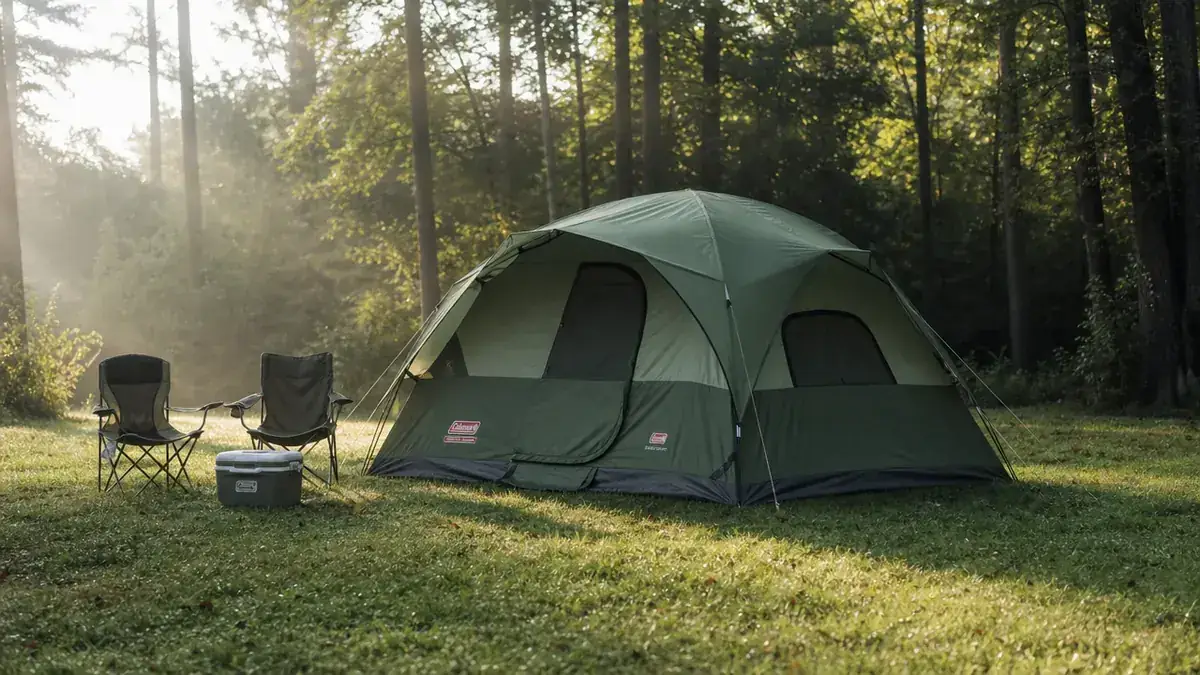
If you've got sixty seconds to pitch a tent in a parking lot before the rain starts, buy the Coleman. If you're setting up once at a campground and then living in that tent for three or four days with two kids, a dog, and a cooler you didn't want to leave in the truck bed, the UNP 6-Person Cabin Tent is the better call. I've owned both tents for two full camping seasons now, not a weekend loaner from a buddy. My UNP has been through a genuinely miserable Fourth of July weekend on the Oregon coast, three dry-camping trips in eastern Washington, and one hailstorm I'd rather not repeat.
This isn't a spec-sheet comparison pulled off product pages. I pitched both tents in my own backyard side by side one Saturday, packed both of them up wet after a storm the following weekend, and dealt with a stuck instant-tent pole hinge at 9pm in the dark with a flashlight clenched in my teeth. The differences that actually matter to a family camper aren't always the ones the marketing photos highlight, and after a season with each, I trust the UNP tent more whenever the forecast looks even a little questionable.
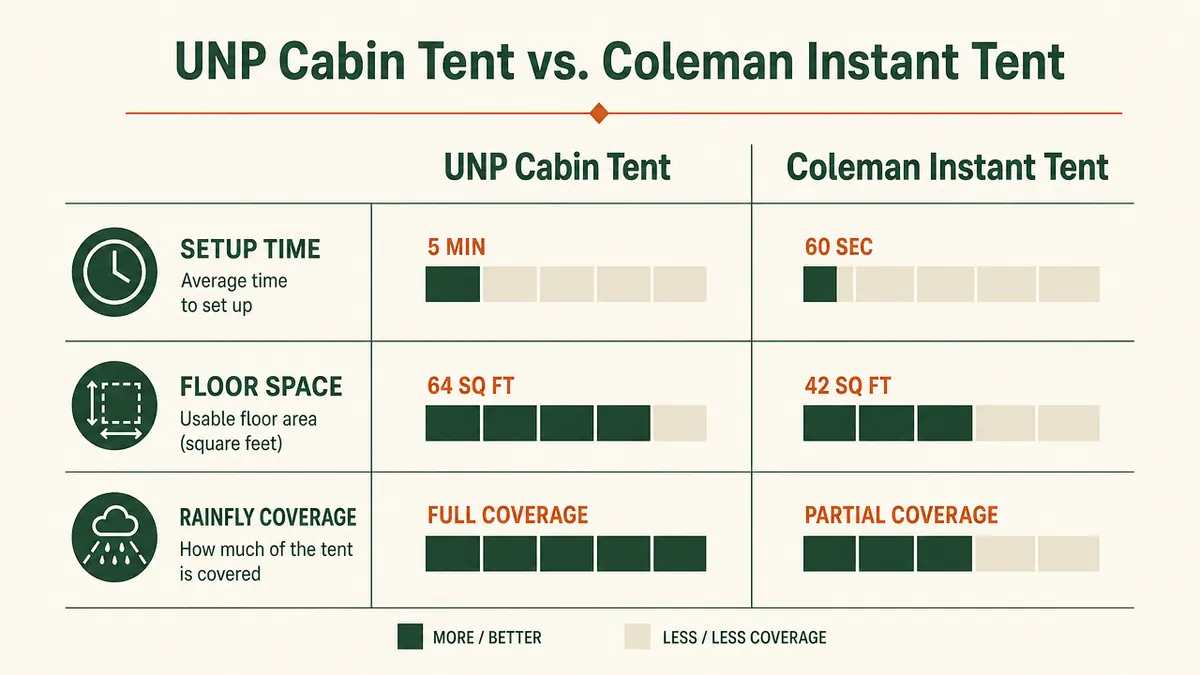
| Spec | UNP 6-Person Cabin Tent | Coleman Instant Tent |
|---|---|---|
| Current Price | Premium tier | Varies depending on retailer |
| Setup Time (2 people) | 12 to 15 minutes, shock-corded poles | 3 to 5 minutes, pre-attached instant frame |
| Floor Space | 10 ft x 9 ft (about 90 sq ft) with steep cabin walls | 10 ft x 9 ft (about 90 sq ft), but sloped walls eat into usable width |
| Center Height | 74 inches | 72 inches |
| Rainfly | Full-coverage removable rainfly included | No separate rainfly, relies on integrated seam-sealed panels |
| Doors and Windows | 2 doors, 3 mesh windows, room divider curtain | 1 door, 2 windows, no divider |
| Packed Weight | 20.7 lbs | 23 lbs |
| Warranty | 1-year limited manufacturer warranty | 1-year limited manufacturer warranty |
Where the UNP Wins
The UNP cabin tent's biggest advantage is the full-coverage rainfly. It's a separate piece that clips over the entire roof and extends past the mesh ceiling panels, which matters more than it sounds like it should on a product page. During that Oregon coast trip, wind-driven rain came in sideways for close to six hours straight, and the UNP stayed dry inside except for a small drip near one door zipper that I fixed the next trip with a bit of seam sealer from the hardware store. The steep cabin-style walls also mean you actually get close to the full 90 square feet of floor space, not a tent that measures big on paper but tapers in hard at head height once you're standing near the walls.
The second thing I noticed after a full season of use is the two-door layout with the mesh room divider curtain. With two kids sharing the tent, being able to split it into a sleeping side and a gear side kept muddy boots, wet rain jackets, and a leaky cooler lid away from the sleeping bags most nights. The UNP also held its stitching and pole sleeves through repeated setups without the fraying I started to see on the Coleman's corner webbing by the end of the same summer, and the zippers on the UNP are still smooth going into a second season.
Where the Coleman Wins
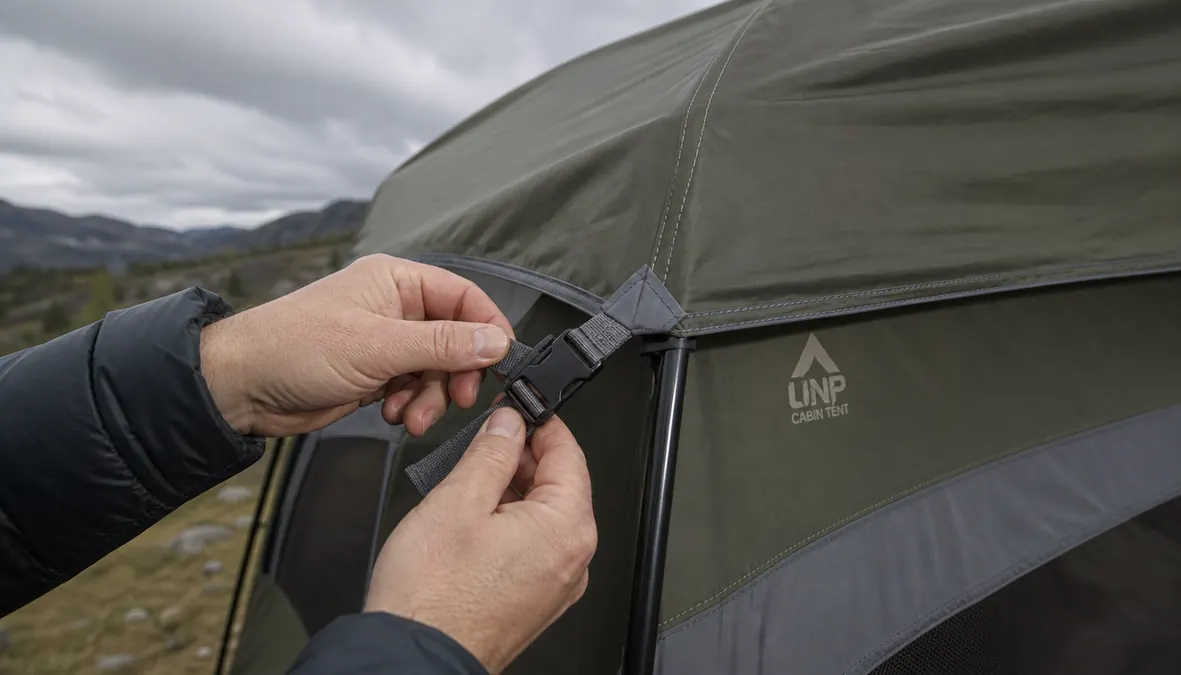
I won't pretend the Coleman doesn't have a real advantage, and it's setup speed. The pre-attached pole frame pops into rough shape in three to five minutes, which is genuinely useful if you're arriving at a site after dark or setting up in a light drizzle and don't want to fumble with shock-corded poles in the rain. For a single overnight stop on a road trip, or for a family that's still figuring out whether camping is even something they enjoy, that speed is worth something real, and I'd be lying if I said I never envied it while I was still threading UNP poles through sleeves in a stiff wind on our second trip out.
The Coleman is also a little lighter and the carry bag is a bit more compact, which matters if trunk space is tight or you're already stacking a second tent, a cooler, and folding chairs into the same car. But I found that advantage shrinks once you factor in the footprint and rainfly you'll probably want to buy separately for the Coleman, since it doesn't ship with one. Once you add those two accessories in, the weight and price gap between the two tents mostly closes, and you're left comparing setup time against everything else.
Six Hours of Sideways Rain and the UNP Never Let a Drop Through the Ceiling
That's the full-coverage rainfly doing its job, not luck. Check today's price on the UNP 6-Person Cabin Tent before your next trip out.
Amazon Check Today's Price on Amazon →Setup Time: What Actually Happens at the Campsite
On paper, a 12 to 15 minute setup sounds like a real tradeoff against the Coleman's near-instant frame. In practice, with two adults working together, the UNP goes from bag to fully staked-out tent in about the time it takes to unload a cooler and a couple of camp chairs from the truck. I walk through the exact sequence I use, including where I stake first and where I leave slack in the rainfly, in my long-term UNP cabin tent review, but the short version is that the extra minutes buy you a tent that doesn't shift in wind overnight the way an instant frame sometimes will if a corner pole isn't fully seated.
Where the time gap really shows up is in bad weather. Coleman's instant frame goes up fast in calm conditions, but I found the corner poles harder to seat correctly when I was rushing to beat an approaching storm, and twice I ended up with a saggy roof panel that pooled water until I climbed back outside to fix it in the dark. The UNP's slower, more deliberate pole-and-sleeve setup meant fewer surprises once the tent was actually staked down and the rainfly was tensioned properly.
Weather Protection After Real Rain
Cabin-style tents in general hold up better in sustained rain than the boxier instant designs, mostly because of taped seams and a proper rainfly overhang rather than relying on coated panels alone to shed water. I go through the full case for that shape in 10 reasons cabin tents beat dome tents, but the short of it is that overhang matters more than fabric weight once water starts running off the roof instead of just sitting on it and finding a seam to work through.
If you're buying either of these tents for a site that doesn't drain well, or you camp somewhere with routine afternoon thunderstorms, I'd also read through how to keep a family tent dry in the rain before your first trip out. Half of staying dry in any cabin tent comes down to technique, staking angle, rainfly tension, and not letting sleeping bags touch the walls, and that applies whether you end up going with the UNP or sticking with an instant-style tent you already own.
Ventilation and Living Inside the Tent
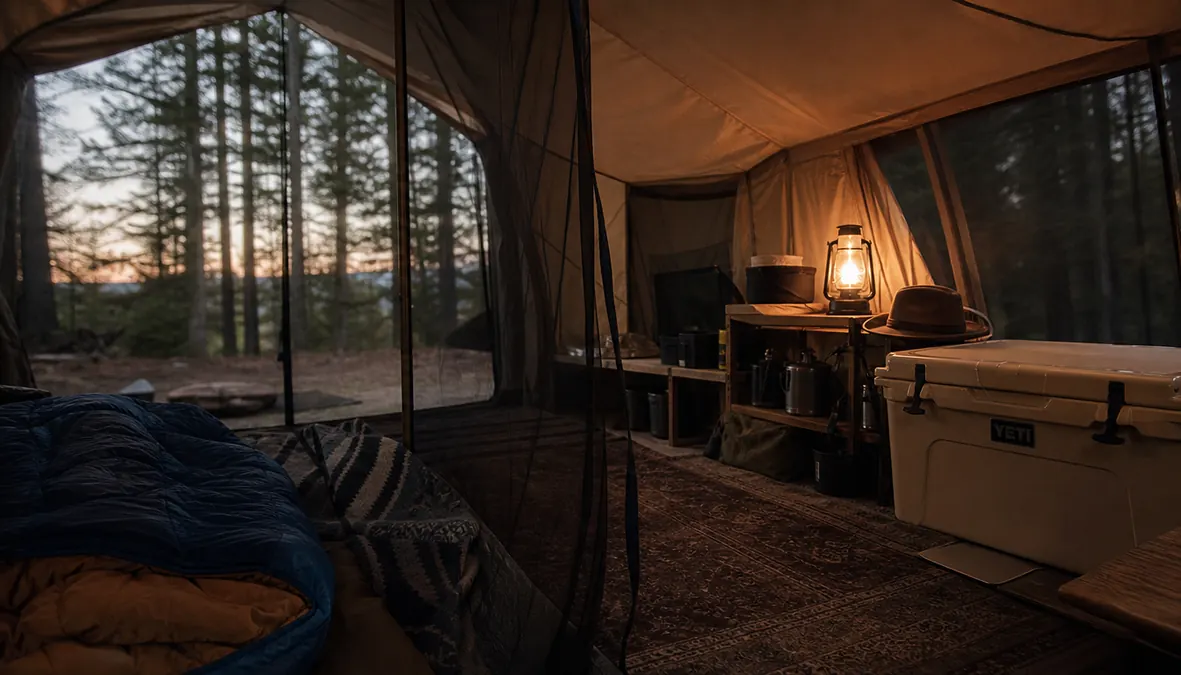
Six people sleeping in any tent for multiple nights creates a lot of condensation, and this is one area where the shape difference actually matters more than most reviews mention. The UNP's steep walls and three mesh windows let hot, damp air rise and vent out near the peak, and I've woken up to noticeably less dampness on the inside of the rainfly than I remember from a season of Coleman mornings. Cracking the two roof vents on cool nights and leaving one window unzipped behind its rain flap kept the inside dry even after a night with the door closed against bugs.
The room divider curtain does double duty here too. Beyond splitting gear from sleeping space, it slows air movement enough on cold nights that the sleeping side stays a few degrees warmer than the open tent would, without blocking airflow completely. The Coleman's single open floor plan is fine for two adults, but once you're sleeping four to six people and a dog, that lack of a divider means everyone feels every zipper opening and every early riser stepping over sleeping bags.
Price and Value Over a Full Camping Season
At today's price, the UNP typically runs less than the Coleman instant tent, and that's before you account for the rainfly and footprint the Coleman doesn't include out of the box. Add those in and the UNP is usually the cheaper option for a comparable amount of weather protection, not just the cheaper sticker price. Over two seasons of regular use, the UNP's poles, zippers, and stitching have held up as well or better than the Coleman's, which matters if you're trying to get more than one or two summers out of a tent before replacing it.
The Coleman still makes sense as a lower-commitment purchase if you're not sure camping is going to stick as a family habit, or if grab-and-go speed genuinely outweighs everything else for your trips. But if you already know you'll be camping five or more nights a season, the UNP's extra setup time pays for itself the first time weather turns on you.
Packing Up and Storage Between Trips
Breaking camp is the part nobody talks about in tent reviews, and it's another spot where the UNP earned some trust. Rolling the tent back into its bag takes a couple extra minutes over the Coleman's fold-flat instant frame, mostly because the poles need to come apart at the shock cords before they'll fit the sleeves back in the bag properly. But the UNP's bag has enough room to shove the tent, rainfly, and stakes in without wrestling the zipper closed, which is more than I can say for the Coleman's snug bag after a season of use stretched the seams a little.
Storage between trips matters too if you're a family that camps a handful of times a summer and stores gear in a garage or shed the rest of the year. The UNP's polyester rainfly and floor have resisted mildew smell through two off-seasons in a plastic tote, as long as I made sure everything was bone dry before packing it away, which is standard practice with any tent. The Coleman held up fine on that front as well, so storage isn't really a deciding factor between the two, but it's worth doing the same dry-before-you-store routine no matter which one ends up in your garage.
Who Should Buy Which
Buy the Coleman if you camp maybe twice a summer, almost always in fair weather, and setup speed matters more to you than livable space or storm performance. It's a fine tent for that use case and I'm not going to talk anyone out of it. Buy the UNP if you're camping five or more nights a season, bringing kids or a dog who need real floor space, or you've been rained on hard in a tent before and don't want to repeat it. After two seasons with both, the UNP is the one still set up in my garage between trips, and the Coleman is the one that got sold at a yard sale last spring. For the full rundown of what I like and don't after two seasons, see my honest UNP cabin tent review.
Still Deciding Between Fast Setup and a Dry Night's Sleep?
After two seasons and one real storm test, the UNP cabin tent is the one still standing in my garage. See today's price and current availability.
Amazon Check Today's Price on Amazon →