
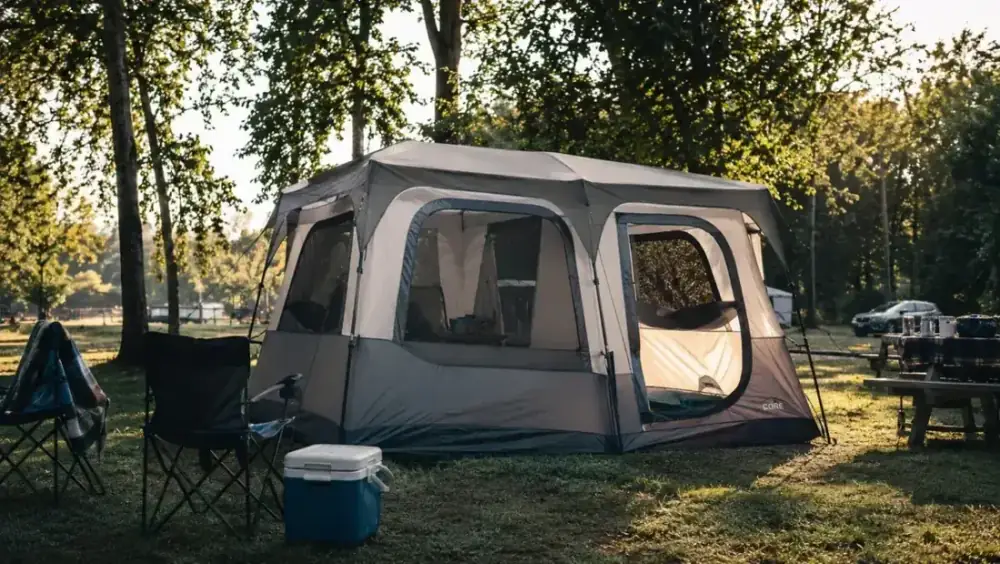
I used to think a tent was a tent. Then I spent three summers dragging a rented dome tent to campsites with two kids, a dog, and enough gear to stock a small store, and I got tired of everyone crouching just to get dressed. The debate between a cabin tent and a dome tent isn't really a debate once you've car camped with a family for a full season. Cabin tents win, and not by a little.
The tent I keep going back to is the UNP 6 Person Cabin Tent, and after using it through spring rain, July heat, and a couple of surprisingly cold September nights, I've got ten specific reasons a cabin tent beats a dome tent for anyone camping with more than one person in the vehicle. None of this applies if you're backpacking. This is strictly a car camping comparison, tent to truck bed, gear and all.
Tired of crouching in a dome tent? Here's the family tent I switched to.
The UNP Cabin Tent gave my family standing room, a real divider wall, and a rainfly that actually keeps water out. See today's price on Amazon before your next trip.
Amazon Check Today's Price on Amazon →You can actually stand up inside
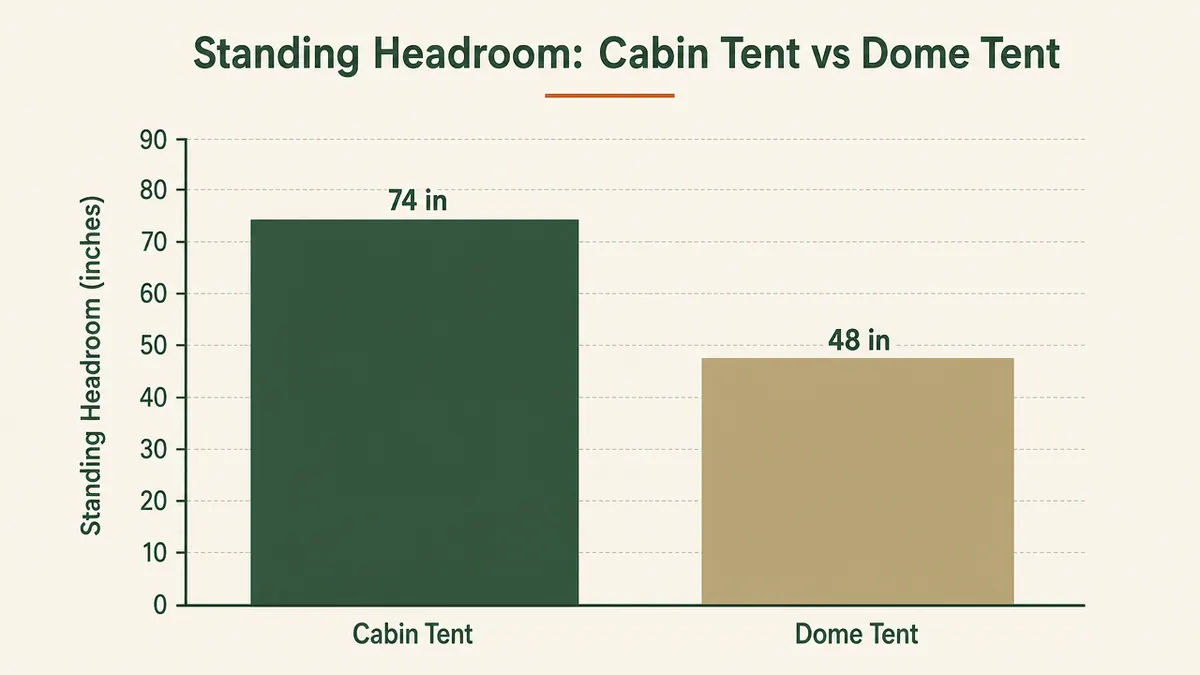
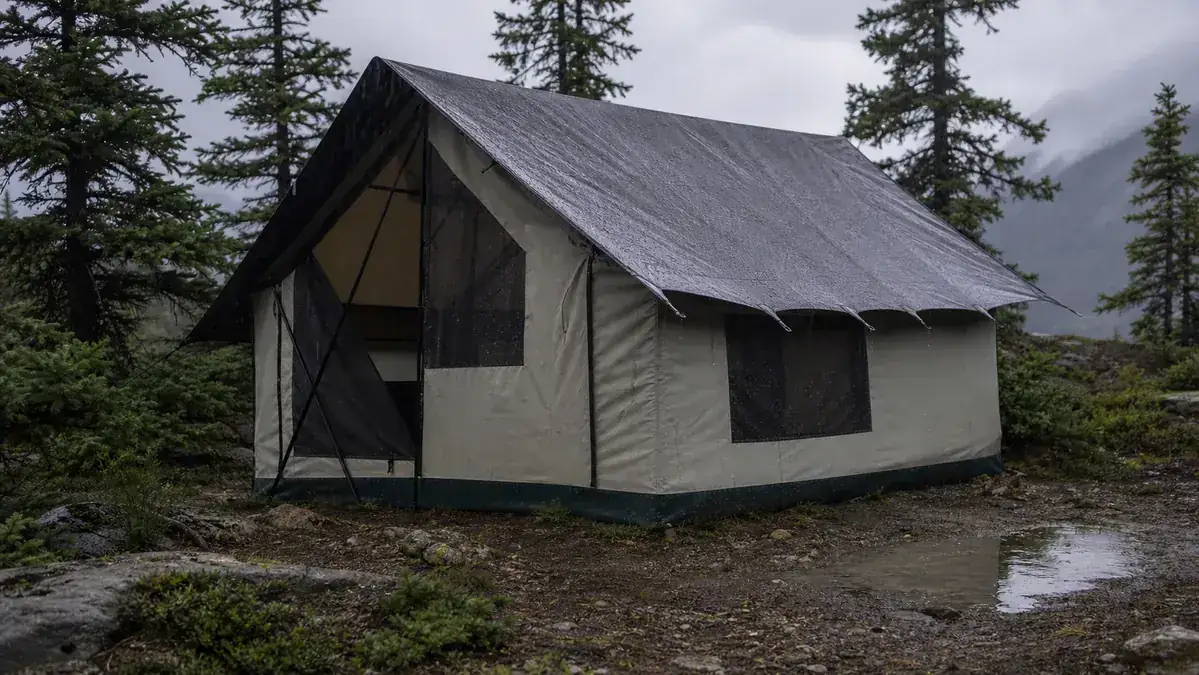
This is the one that sold me first. A dome tent's curved walls slope in fast, so anyone over five feet tall is bent over the second they step past the doorway. The UNP cabin tent has near-vertical walls and about six feet of center height, which means I can get dressed standing up, my son can jump into his sleeping bag instead of crawling, and nobody's cracking their head on the ceiling at 2am on a bathroom run.
The floor space isn't wasted on curved corners
Dome tents claim a square footage number that lies to you, because the curved walls eat into usable floor space near the edges. A cabin tent's boxy shape means the square footage on the box is the square footage you actually get. With the UNP tent's 10x9 foot floor, I can fit two queen air mattresses and still walk between them without stepping on anyone's sleeping bag.
Setup is faster once you know the poles
I'll admit the first pitch took me twenty minutes with the instructions in hand. By the third trip, my wife and I had the UNP cabin tent up in about nine minutes, color-coded poles slotting into color-coded sleeves. Dome tents are usually quicker on your very first try since there are fewer poles, but cabin tent poles are simpler geometry once you've done it twice, and there's no guessing which curved pole crosses which.
The room divider changes everything for families
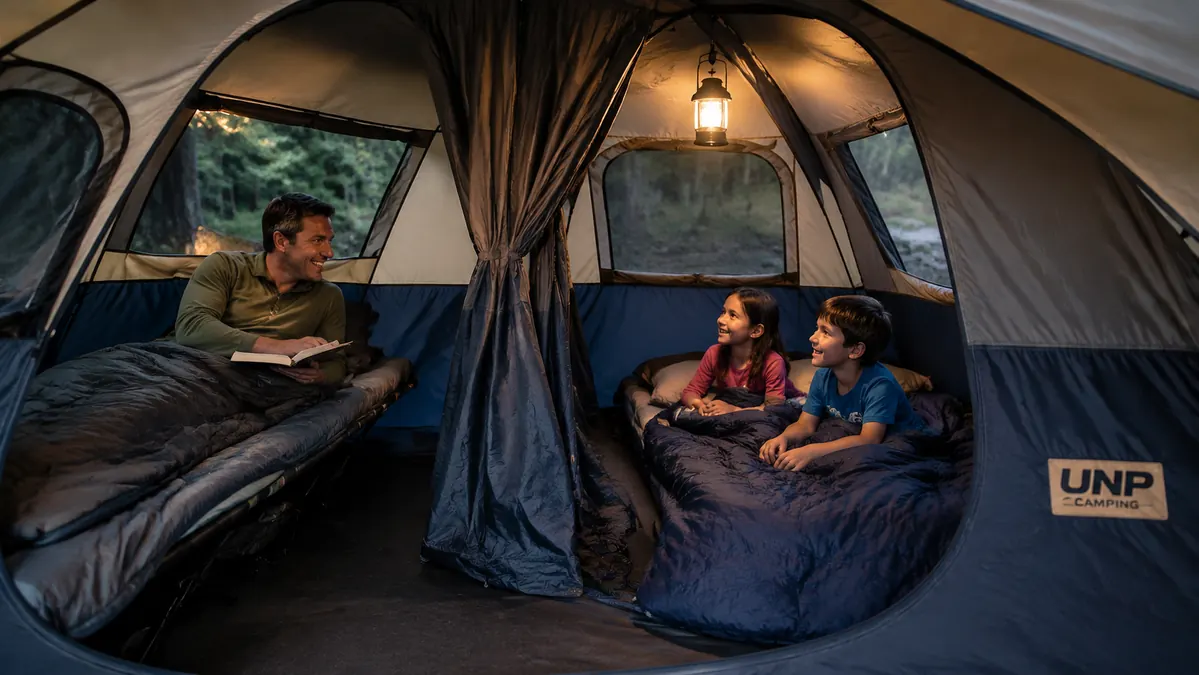
This is the feature nobody tells you to look for until you need it. The UNP cabin tent has a removable curtain divider that splits the tent into two separate rooms. My kids get their own side, I get mine, and when a cranky seven-year-old wants lights out at 8pm while the adults are still reading, nobody has to negotiate. A single-room dome tent just doesn't have this option, and I've never seen a dome tent that adds one well.
Windows and cross-ventilation are dramatically better
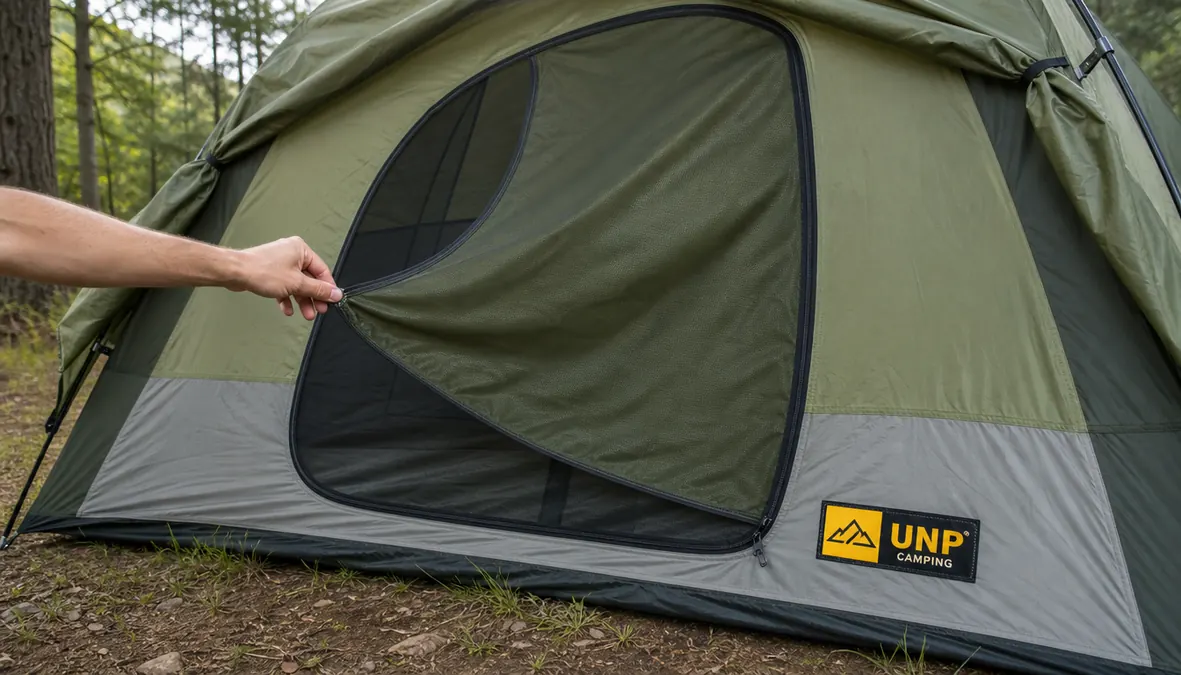
Cabin tents like the UNP model are built with large mesh windows on multiple walls, not just a single vent up top. On a warm night in July, I had three windows open plus the door screen, and the airflow through the tent kept it comfortable without a fan. Most dome tents have one or two small windows because there's less vertical wall space to put them on, so the air just sits.
The rainfly actually sheds water instead of pooling it
I got caught in a genuine downpour at a state park last May, the kind where the ground turns to soup within an hour. The UNP tent's steep-angled rainfly ran water straight off the sides instead of letting it sit on the roof and eventually seep through, which is a real risk on flatter dome-style flies. We stayed dry through the whole storm, including the gear stacked near the tent walls, and the floor stayed dry too.
You get real storage, not just corner pockets
A dome tent gives you a mesh pocket or two and calls it storage. The extra wall height on a cabin tent means you can actually stand duffel bags upright against the sides, hang a lantern from the ceiling loop, and still have floor space left over. On a four-night trip with two kids, that difference is the reason our tent didn't look like a yard sale by day two, gear stayed organized against the walls instead of piled in the middle.
The door is wide enough for gear, not just people
Dome tent doors tend to be narrow zip flaps because the curved wall doesn't leave much room. The UNP cabin tent has a full-width door panel, which matters more than it sounds like it should when you're hauling a cooler, a pack-n-play, or a sleepy kid through the entrance at the same time. I never had to set anything down outside just to get through the door, even with both arms full.
It handles wind better than people expect
The knock on cabin tents used to be that the flat walls catch wind like a sail. In practice, with the guy lines staked out properly and the UNP tent's frame pulled taut, I camped through two genuinely gusty nights on an open bluff with no flapping and no pole stress. A dome tent sheds wind a bit more naturally due to its shape, but a properly staked cabin tent isn't the liability people assume it is.
It just feels like a room, not a tube
This last one is less measurable but it's the reason my kids ask to camp again. A dome tent always feels like you're living inside a sleeping bag. The UNP cabin tent, with its vertical walls, divider curtain, and headroom, feels like an actual room, and that changes how everyone behaves in it. Cards get played on the floor. Kids sit up and read instead of lying flat. It's a small thing that adds up over a four-day trip, and it's the difference between a tent you tolerate and one you actually enjoy sitting in.
What I'd Skip
I'm not going to pretend cabin tents are perfect. They're heavier and bulkier in the bag, so if you're backpacking or even hike-in camping from a parking lot, a dome or tunnel tent is the better call every time. Cabin tents are for car camping, where the tent goes from trunk to campsite in one carry and weight never enters the equation. If you're counting ounces, this whole comparison doesn't apply to you, and you should stick with a lighter dome shape instead.
For more on keeping the inside dry once it's pitched, I wrote up what actually works in how to keep a family tent dry in rain, and if you want the full breakdown of how the UNP tent held up after months of use, seasons of weather, and a lot of muddy shoes tracked across the floor, I covered that separately in my long-term review of the UNP cabin tent. Both of those go deeper than a reasons list can.
A dome tent always feels like you're living inside a sleeping bag. A cabin tent feels like a room.
Ready to trade crouching for standing room?
The UNP Cabin Tent is the one I keep pulling out of storage every trip. Check today's price on Amazon before you book your next campsite.
Amazon Check Today's Price on Amazon →