

I spent four seasons sleeping on a foam pad before I finally switched to a camping cot, and I regret every one of those nights I spent on the ground. The camping cot versus sleeping pad debate isn't really close once you've slept on both at a car campsite instead of a backpacking trail where every ounce counts. I run the ABORON XXL Camping Cot now, and it's the one piece of gear that changed how my back and my kids' sleep schedule survive a weekend outside. Here are ten reasons a camping cot beats a sleeping pad for anyone driving to their site instead of hiking in.
The Cot That Ended My Sleeping Pad Era
If you're still rolling out a pad every weekend, the ABORON XXL Camping Cot is the upgrade that actually changes how you sleep at camp. Check today's price on Amazon before your next trip.
Amazon See the ABORON Cot on Amazon →You're Off the Ground, Where the Cold Actually Lives
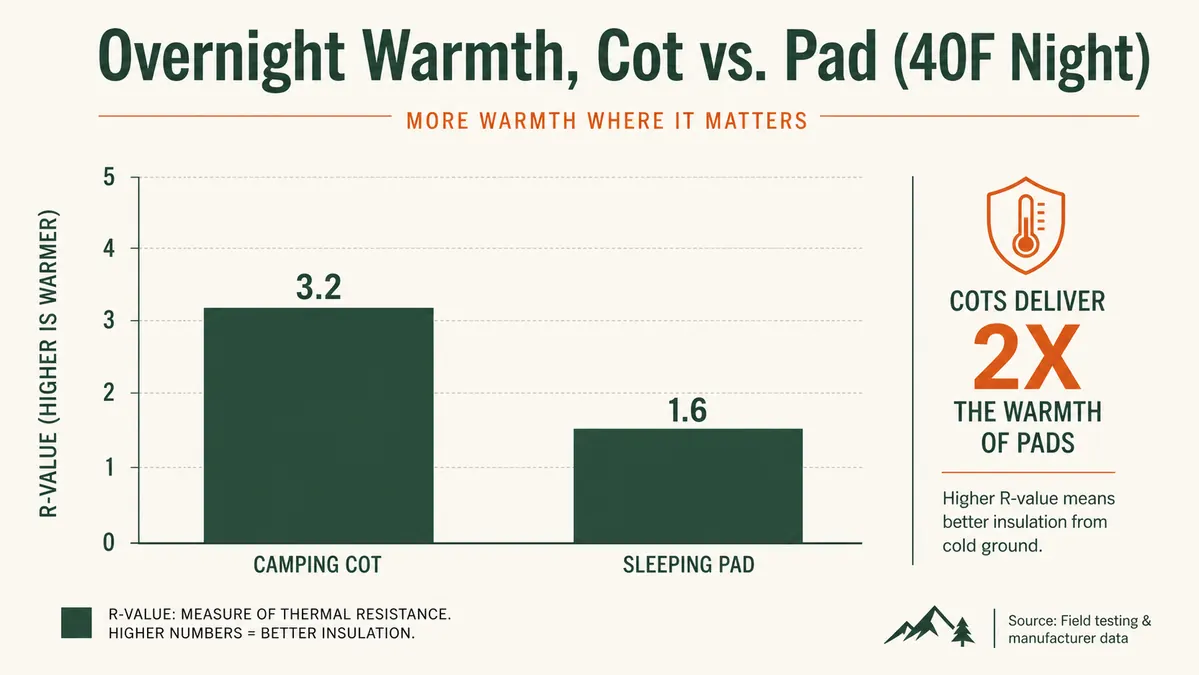
A sleeping pad fights the cold coming up through the ground with an inch or two of foam or air. A camping cot skips the fight entirely by putting you a foot and a half above the dirt, where the real chill of the night settles. The ABORON cot's deck sits high enough that cold ground air just doesn't reach you the same way. I've noticed this most on shoulder-season trips when the pad crowd is shivering by 2am and I'm not.
No More Waking Up on Bare Ground at 3am
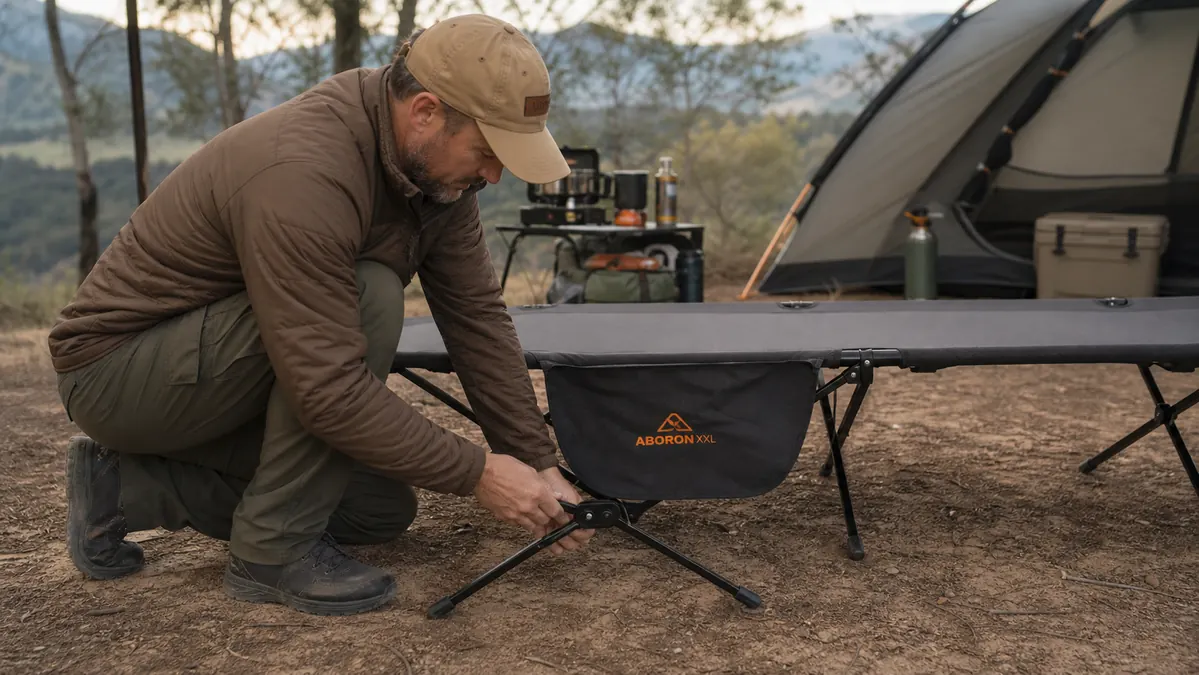
Every sleeping pad I've owned has slowly lost air or gone flat in spots by the middle of the night, and I'd wake up with a hip bone pressed straight into hard-packed dirt. A camping cot doesn't deflate. The ABORON cot's steel frame and taut fabric deck stay exactly as firm at 3am as they were at 9pm, so there's no slow leak turning your bed into a floor.
Setup Takes Two Minutes, Not a Lung Workout
Inflating a pad by mouth after a long drive and a full day of setting up camp is nobody's favorite part of the trip, and battery pumps are one more thing to charge and pack. The ABORON cot unfolds and locks its legs in place in under two minutes, no breath required. On the nights we roll in after dark, that difference matters more than it sounds like it should.
A Puncture Doesn't End Your Trip
A sharp pinecone, a stray zipper pull, or a dog's nail can put a hole in a sleeping pad, and then you're patching a seam by headlamp or sleeping on the ground for the rest of the weekend. There's no air chamber to puncture on a cot. The ABORON XXL's fabric deck is stretched over a frame, so a small tear doesn't take the whole bed down with it the way a slow leak does.
It Holds More Than a Pad Ever Will
Most sleeping pads top out around 300 pounds of rated capacity, and even then the comfort drops off fast near that ceiling. The ABORON XXL is rated to 900 pounds, which means a bigger camper, a couple sharing a wide cot, or just someone who doesn't want to feel every seam of the fabric under their weight all night. That capacity margin is a real comfort difference, not just a number on the box.
The Edge Doesn't Cave In When You Roll Over
A side sleeper on an air pad knows the edge roll, where the pad tips and dumps you toward the tent wall the second you shift positions. A cot's frame runs the full perimeter, so the edge holds firm no matter where your weight lands. I sleep on my side most nights, and the ABORON cot is the first sleep surface at camp that doesn't punish me for it.
There's Free Storage Underneath You
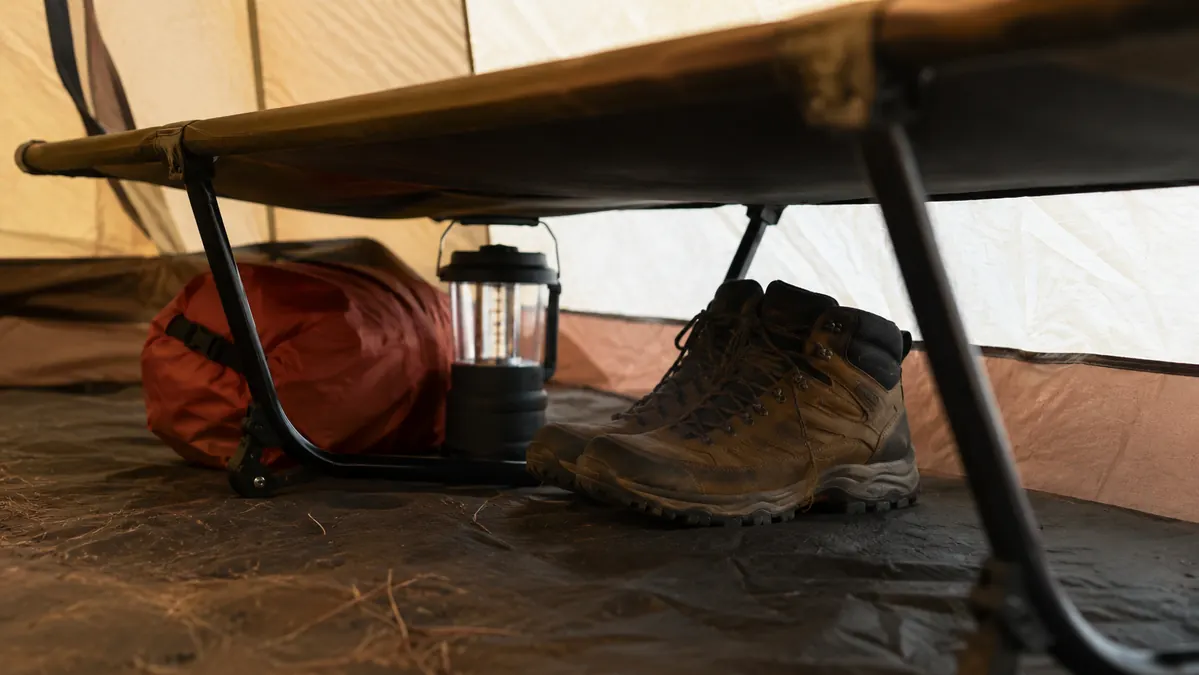
A pad lies flat on the tent floor, which means your boots, headlamp, and overnight bag end up scattered around it, usually right where someone steps at 2am. A cot creates a foot and a half of dead space underneath that's perfect for stashing gear out of the way. I keep a dry bag and my boots under the ABORON cot every night, and the tent floor stays clear.
Getting Up in the Night Doesn't Require a Push-Up
Rolling off a low pad and getting up off the ground gets harder on the knees and the back the more nights you do it, especially for older campers or anyone with a bad hip. A cot puts you at a height close to a normal bed, so standing up for a middle-of-the-night bathroom trip is a normal motion instead of a workout. My dad noticed this within one trip on the ABORON cot and hasn't touched his old pad since.
It Doubles as Extra Seating or a Guest Bed
A deflated pad is just a rolled-up mat when you're not sleeping on it, but a cot stays useful all day. I've used the ABORON cot as extra seating around the fire when the chairs ran out, and it's become the default spot for a surprise overnight guest without anyone digging through the garage for an air mattress.
It Holds Up Across Seasons Instead of Just Summer
A thin pad works fine on a warm July night and struggles the rest of the year. Because a cot keeps you off the ground rather than trying to insulate against it, it performs more consistently from a cool spring weekend into a crisp fall one, especially once you add a pad or an underquilt underneath on the colder nights. The ABORON cot has been my base for every season so far, not just the warm months.
What I'd Skip
I'm not going to pretend a cot is perfect for every trip. If you're backpacking in on foot, the packed weight and folded size of any camping cot, ABORON included, is a poor trade against an ultralight sleeping pad that rolls down to the size of a water bottle. A cot is a car camping tool, not a trail tool, and I'd skip it entirely for anything you have to carry more than a mile. If you're deciding between the two for a family site you drive to, though, I'd read the full ABORON camping cot review after a season of use and the side-by-side breakdown in camping cot versus sleeping pad before you buy either one.
The night I stopped waking up with a hip bone in the dirt was the night I stopped being a sleeping pad person.
Ready to Sleep Off the Ground for Good
If even one of these ten reasons sounds like your last camping trip, the ABORON XXL Camping Cot is worth a look before your next one. Check today's price on Amazon and see the current reviews for yourself. For cold nights specifically, pair it with the tips in how to sleep warm on a camping cot.
Amazon Check Today's Price on Amazon →