
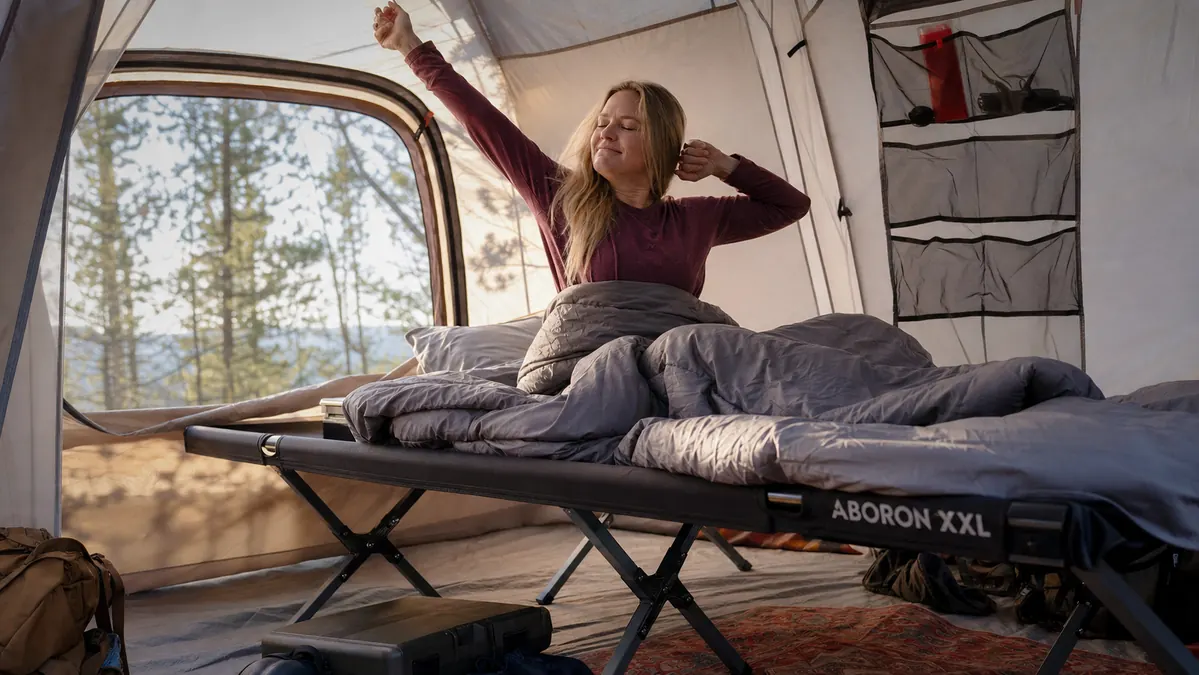
If you're standing in the gear aisle wondering whether to buy a cot or a sleeping pad this season, I can save you some scrolling. For car camping, a cot wins on comfort and setup ease. A pad wins on packed size and price. I've slept on both more nights than I can count, most recently four straight months on the ABORON XXL Camping Cot, and I still keep a Coleman Self-Inflating Camp Pad in the truck for trips where cargo space runs tight. Neither one is wrong. They just solve different problems, and which one you need depends on how you camp, not what looks better in a gear review.
I want to be upfront that I'm not an ultralight backpacker weighing ounces on a kitchen scale. I drive to my campsite, so I don't care that the ABORON cot weighs around 20 pounds packed. What I care about is whether I wake up with a sore hip, whether setup takes five minutes or twenty, and whether the thing survives a full season of loading and unloading out of a truck bed. That's the lens this comparison is written through, and it's why the ABORON cot comes out ahead for most families reading this site, even though the sleeping pad has a real edge in a couple of categories I'll get into below.
To make this comparison fair, I set up both systems back to back over the same three-day stretch in early fall, sleeping on the ABORON one night and the Coleman pad the next, in the same tent, on the same patch of ground, with the same sleeping bag on top. That kind of side-by-side test matters more than it sounds like it would, because temperature, ground slope, and how tired you are going in can all skew how any one night feels. Doing it twice in a row on the same site removed most of those variables and left me with a pretty clean read on where each system actually helps and where it falls short.
| Spec | ABORON XXL Camping Cot | Self-Inflating Sleeping Pad |
|---|---|---|
| Price (typical range) | ABORON, check today's price on Amazon | Self-inflating pad at moderate cost |
| Packed Size | About 40 x 8 x 8 inches in carry bag | Rolls to about 20 x 8 inches |
| Setup Time | 3 to 5 minutes, telescoping steel frame | 10 to 15 minutes to fully self-inflate |
| Off-Ground Height | About 17 inches off the tent floor | 2 to 4 inches thick, flush with the floor |
| Weight Capacity | 900 lbs rated across the frame | No formal weight rating, can bottom out |
| Cold-Weather Insulation | None built in, needs a pad or underquilt | Insulates directly against ground cold |
| Storage Underneath | Open space under the frame for gear | None, sits flat on the tent floor |
| Durability | Steel legs, thicker oxford fabric | Air cells and valves, puncture-prone |
| Best For | Car camping, family trips, bad backs | Backpacking, small vehicles, occasional use |
Where the ABORON Cot Wins
The biggest difference between sleeping on the ABORON cot and sleeping on a pad is elevation. The ABORON sits about 17 inches off the ground on its steel X-frame, which puts you above the cold air that pools at ground level and above whatever roots, rocks, or slope the tent floor didn't quite smooth out. On a sleeping pad, you're still lying directly on the tent floor with only 2 to 4 inches of foam or air between you and the ground, so every lump underneath you gets translated straight into your hip and shoulder. After four months on the ABORON, I stopped noticing the ground entirely, which was never true on a pad no matter how many times I re-inflated it before bed.
Weight capacity is the other place the ABORON pulls ahead by a wide margin. It's rated for 900 pounds across the frame, which matters if you're a bigger camper, sharing gear with a partner, or just tired of sleeping systems that feel flimsy under normal body weight. A typical self-inflating pad doesn't carry a weight rating at all because it isn't a structural product, it's a cushioning layer, and I've had one bottom out under me on a rocky site more than once. The ABORON's steel legs and thicker oxford fabric also mean it doesn't sag or bow in the middle the way a lot of budget cots do after a season of use, and there's genuinely useful dead space underneath the frame for stashing boots, a headlamp, or a duffel bag overnight, something no sleeping pad can offer. I go into the full rundown of how it held up over a season in my long-term ABORON camping cot review.
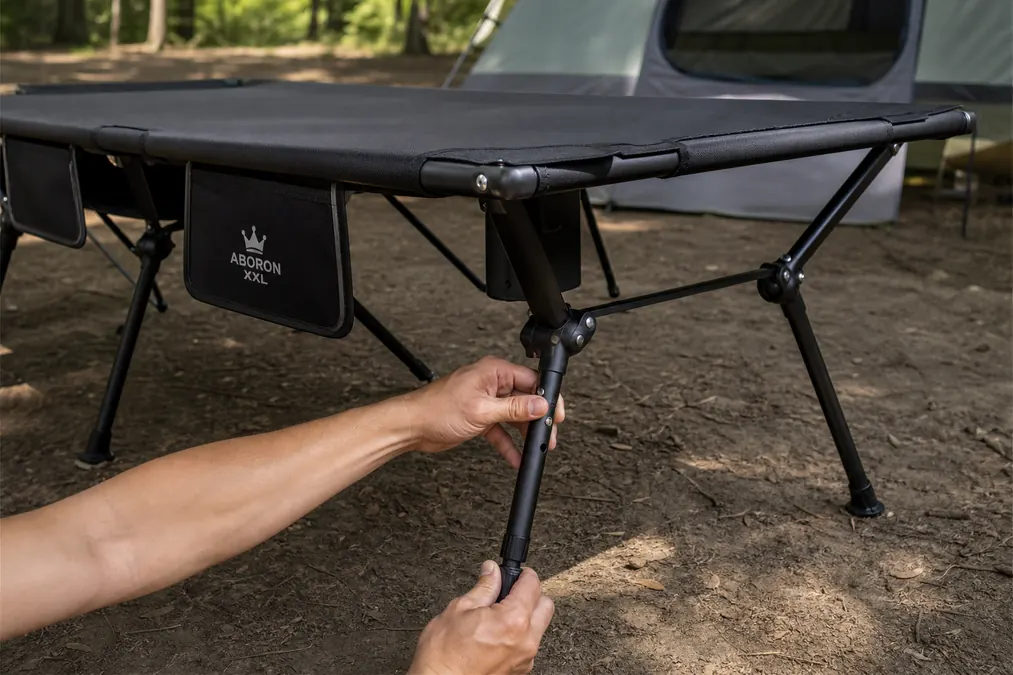
Setup is also less fiddly than it looks in photos. The ABORON's legs telescope and lock with a simple pin system, so putting it together is closer to setting up a folding table than assembling furniture, and I've done it in the dark with a headlamp without much trouble. That matters on a family trip when you're setting up camp after a long drive and kids are hungry and tired. A sleeping pad's setup is arguably even simpler on paper, just open the valve, but self-inflating pads rarely finish the job on their own. In practice I've had to blow extra air into every pad I've owned to get it firm enough to actually support my hips, which adds a few minutes of huffing into a valve that the spec sheet conveniently leaves out.
Where the Sleeping Pad Wins
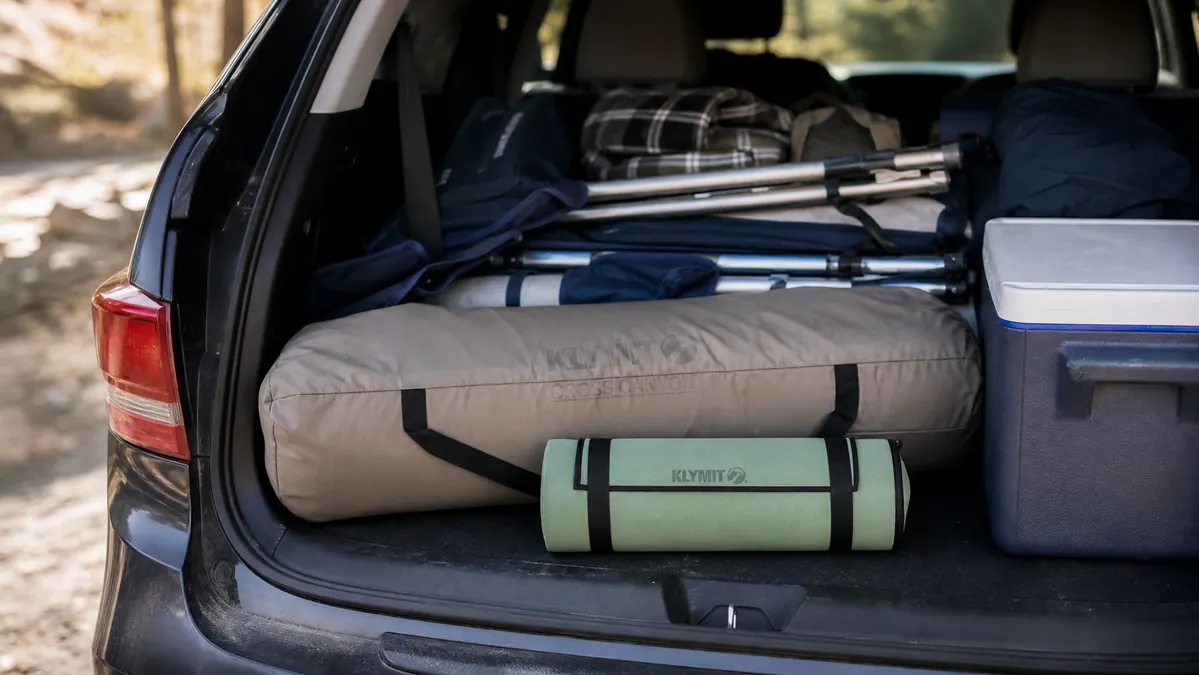
I'd be lying if I said the cot wins everything, and a straightforward comparison would be pretty useless if it did. A self-inflating pad like the Coleman rolls down to roughly the size of a rolled-up sleeping bag, somewhere around 20 by 8 inches, versus the ABORON's carry bag which runs closer to 40 by 8 by 8 inches and takes up real trunk space. If you're stacking coolers, chairs, and a stove in a smaller vehicle, or if you're camping somewhere with a short hike in from the parking area, that size difference is not trivial. Setup is also nearly instant on a pad, you unroll it and open the valve, versus the few minutes it takes to unfold and lock the ABORON's telescoping legs into place.
The other real advantage is warmth in cold weather, and this one surprised me the first time I camped on the ABORON in October without thinking it through. Because the cot elevates you into open air, cold actually circulates underneath you and can make a cot colder than the ground on a chilly night, whereas a foam or air-and-foam pad sits flush against the tent floor and insulates you directly from ground temperature. I cover the fix for this in how to sleep warm on a camping cot, but it's worth knowing upfront that a cot by itself is not automatically the warmer choice. A pad is also the cheaper entry point for someone who camps two or three weekends a year and doesn't want to spend as much as the ABORON's current price on a sleep system they'll barely use.
There's also a durability trade-off worth being honest about in both directions. A pad's air cells and valve are the failure point, a rock under the tent floor or a stray zipper pull can put a slow leak in a pad that leaves you on the ground by 3 a.m., and repairs mean carrying a patch kit. The ABORON doesn't have that specific failure mode since there's nothing to puncture, but it does have moving joints and a fabric sling that can wear over years of folding and unfolding. If you're the kind of camper who stores gear loose in a garage and isn't gentle with folding mechanisms, that's worth factoring in, even though I haven't seen any sign of wear on mine yet after a full season.
Tired of Waking Up Sore After a Night on the Ground?
The ABORON XXL Camping Cot gets you 17 inches off the dirt, rocks, and roots, with a 900 pound frame rated to handle real adults, not just a lightweight sleeper. Check today's price and see if it's in stock for your next trip.
Amazon Check Today's Price on Amazon →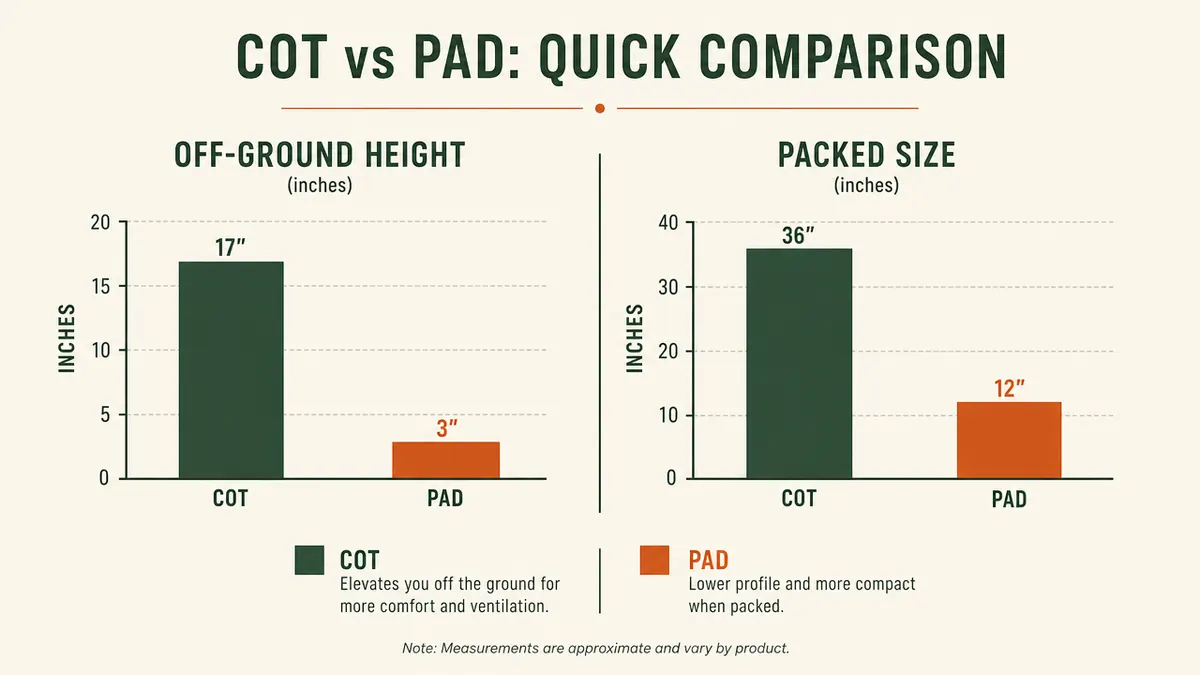
Can You Use Both Together
The two systems aren't actually mutually exclusive, and this is the part most comparison articles skip. Plenty of campers, myself included on cold-weather trips, put a thin foam or self-inflating pad directly on top of the ABORON's cot fabric. Doing this solves the cot's biggest weakness, the lack of built-in insulation, while still keeping you elevated off the ground and out of reach of rocks and roots. You lose a little of the pad's space-saving advantage since you're carrying both pieces of gear, but if you already own a pad from years of camping before you upgraded to a cot, there's no reason to retire it.
I wouldn't recommend buying both pieces of gear brand new just to combine them, that adds cost for a benefit you can usually get with a warmer sleeping bag or a cot-specific underquilt instead. But if a pad is already sitting in your gear closet, laying it across the ABORON on a cold-weather trip is a genuinely useful combination, not a compromise. It's one of the few setups I've tested where using an older, cheaper piece of gear alongside a newer one actually made both perform better than either did alone.
Who Should Buy Which
If you're a family or weekend car camper who drives to the site, values a full night of real sleep, and doesn't mind a slightly bigger item in the trunk, the ABORON XXL Camping Cot is the one I'd tell you to buy. It's the setup I reach for on almost every trip now, and I lay out exactly why in 10 reasons camping cots beat sleeping pads. If you're hiking any real distance to your site, camping in a small car, or you only get out a couple of times a year and don't want to commit much money to a sleep system, a self-inflating pad is the more sensible pick, and there's no shame in that. I also cover the honest downsides of the ABORON, including the cold-air issue above, in my honest ABORON camping cot review, so you're not just hearing the good parts here.
If you're trying to make the call quickly, ask yourself three questions. First, do you drive to your campsite or hike in? If you drive, the ABORON's size stops being a real downside. Second, do you camp mostly in fall and winter, or mild three-season weather? If cold nights are common, budget for either an underquilt with the cot or accept that a pad alone handles ground cold better on its own. Third, how many nights a year are you actually sleeping outside? Occasional campers rarely need to spend what a quality cot costs, while anyone sleeping outside ten or more nights a season will feel the comfort difference every single one of those nights.
Ready to Stop Sleeping on the Ground?
After a full season of car camping trips, the ABORON XXL Camping Cot is still the piece of gear that made the biggest difference to how I sleep at a campsite. See today's price and current availability before your next trip out.
Amazon Check Today's Price on Amazon →