
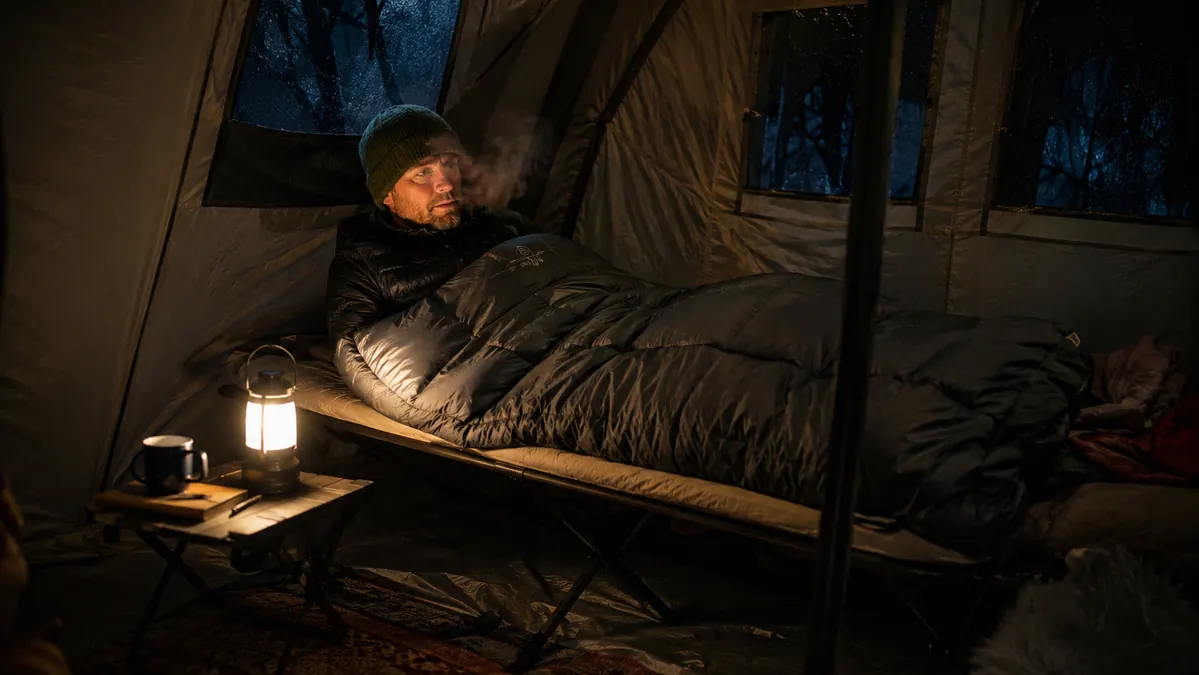
The first time I spent a genuinely cold night on a camping cot, I couldn't figure out why I felt colder than I had on a foam pad laid straight on the ground a month earlier. I was elevated off the dirt, tucked into a bag rated to 20 degrees, wearing a base layer, and I still woke up at 2 a.m. with cold feet and a stiff back from shivering myself half awake. The cot itself wasn't the problem. Open air moving freely underneath my body all night was pulling heat straight out of the bottom of my bag, hour after hour. Figuring out how to sleep warm on a camping cot took me two full seasons of trial and error before I got the underside problem solved for good.
These days most of my cold-weather testing happens on an ABORON XXL cot, partly because that's what finally helped me crack this. The frame is wide enough, 32 inches across, that I can stack a foam pad, a self-inflating pad, and a mummy bag on top without the whole pile sliding off the way it did on a narrower cot I used to run. Once I had a stable enough platform to actually build a real insulation stack on top of it, the rest of the problem turned into a checklist instead of a mystery. If you're still deciding between a cot and sleeping straight on a pad at all, I get into that tradeoff in 10 Reasons Camping Cots Beat Sleeping Pads. For now, here's the five-step routine I run anytime the forecast drops below 40 degrees at the campsite.
A cot only sleeps warm if you build it right
I run this whole routine on the ABORON XXL cot, mostly because its wide, stable frame is what makes a real insulation stack possible in the first place. Check today's price before your next cold-weather trip.
Amazon Check Today's Price on Amazon →Step 1: Understand Why You're Cold in the First Place
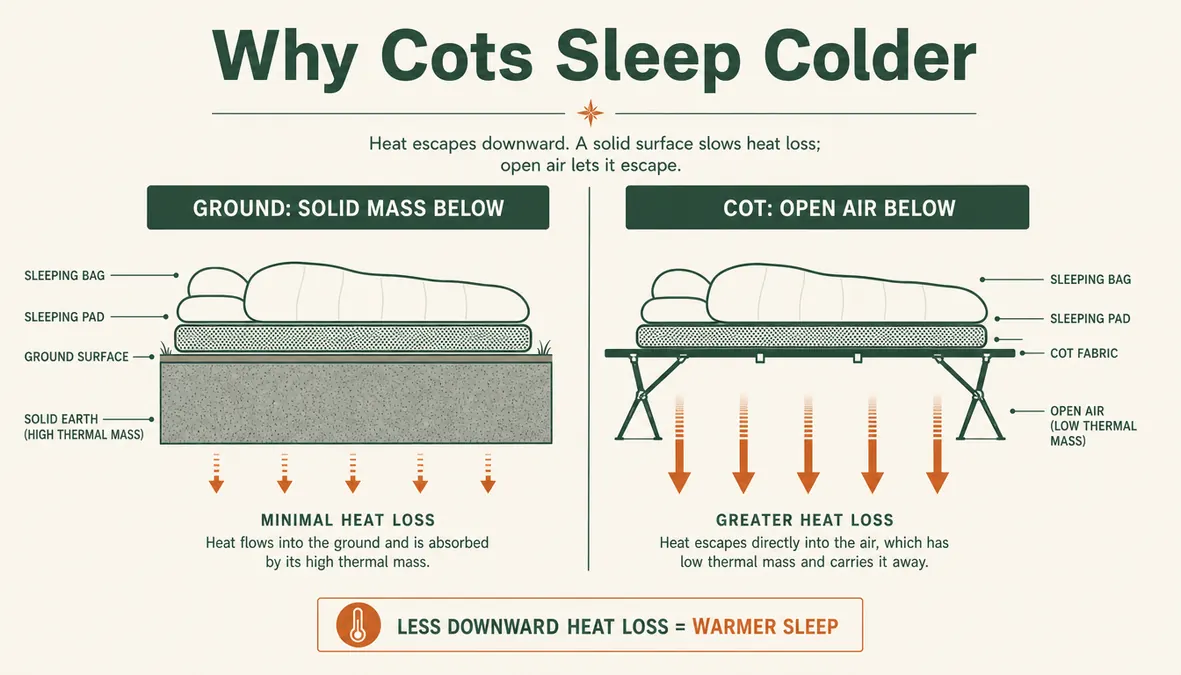
Ground camping and cot camping lose heat two completely different ways, and most people never learn the difference. On the ground, your body weight compresses the pad right below you, but the dirt underneath is a solid mass that holds a bit of your body heat over the course of the night. A cot has nothing but open air underneath the fabric, so cold air keeps circulating and carrying heat away in what's basically constant convective loss. That's why a sleeping bag rated to 20 degrees on the ground can feel closer to a 35-degree bag once you put it on a bare cot with nothing underneath you.
This is the single biggest thing I tell people who write in confused about why cot camping felt colder than sleeping on bare ground ever did. It's not the bag, and it's not the tent. It's the six or eight inches of open, moving air between the cot fabric and the ground, and every step below is really just a different way of closing that gap.
It also explains why two people can sleep on the exact same cot in the exact same tent and have completely different nights. Someone who packed a foam pad without thinking much about it will sleep fine. Someone who just laid a bag straight on the cot fabric will spend the whole night chasing warmth that keeps leaking out from underneath them.
I learned this the hard way on a 28-degree October night at a state park outside our usual weekend loop, the kind of trip where the forecast had said mid-30s and the actual overnight low landed a lot colder. I'd packed my regular bag but skipped the foam pad since I figured the ABORON cot's mesh deck alone would be enough. It wasn't. I ended up piling every jacket I had underneath me by midnight, which is a bad way to find out a lesson you could have avoided with a five-dollar pad packed ahead of time.
Step 2: Build an Insulation Stack Between You and the Cot Fabric
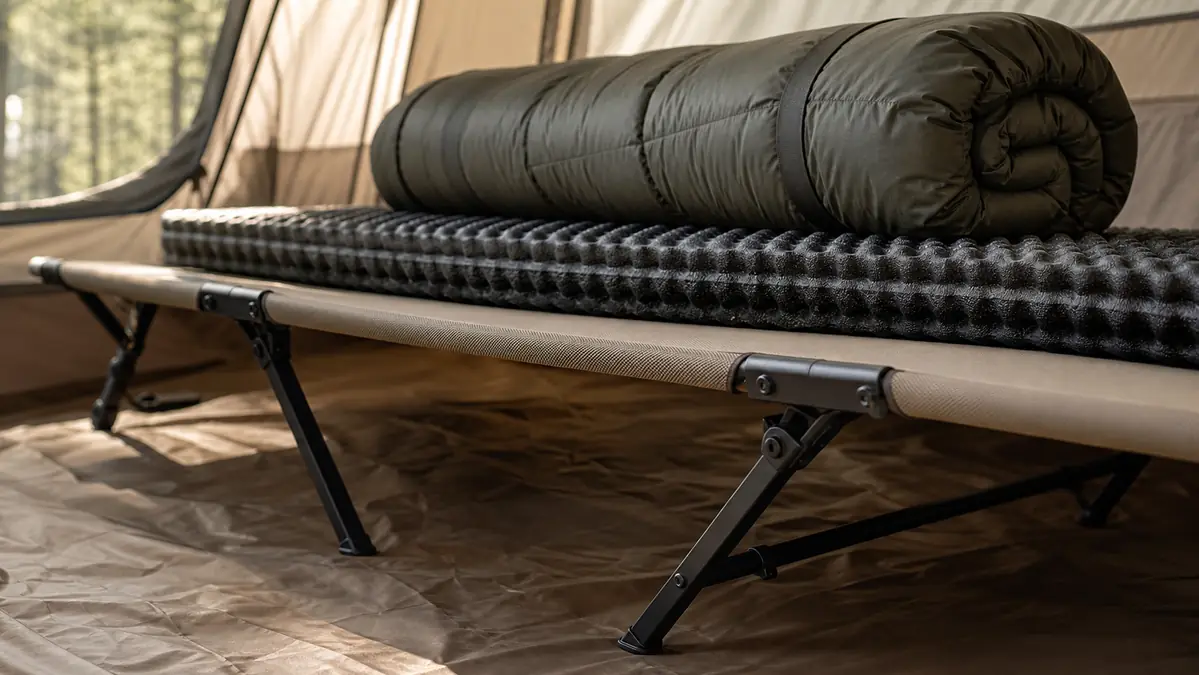
The fix for convective heat loss is layering, the same principle that works for winter coats applied to what's under your body instead of on top of it. On the ABORON cot I start with a closed-cell foam pad laid directly on the cot fabric, then a self-inflating pad on top of that, then my sleeping bag. The foam pad is doing the real work here. It traps a layer of still air that the moving air underneath the cot can't get to, and still air is what actually insulates, not the material by itself.
I made the mistake early on of thinking a nicer sleeping bag would fix a cold cot, and it didn't, because no amount of insulation on top of you does much good if heat is being pulled out from below at the same rate. Once I started treating the space under my body as its own separate problem, cold nights on the ABORON cot stopped being a coin flip.
If you only do one thing from this whole routine, do this one. A basic foam pad costs less than a tank of gas and it's the difference between waking up warm on a wide, stable cot and waking up at 3 a.m. trying to remember where I packed the extra blanket. For a closer look at how a stacked cot setup actually compares to sleeping on a pad alone, I laid out the specifics in Camping Cot vs. Sleeping Pad.
Step 3: Match Your Sleeping Bag Rating to Cot Use, Not Ground Use
Sleeping bag temperature ratings are tested assuming a sleeping pad underneath rated for the same conditions, and manufacturers don't test on a bare cot at all. If you're buying a bag specifically for cot camping, or you already own one and keep getting cold, plan on the bag underperforming its rating by 10 to 15 degrees unless you've solved the insulation stack in Step 2 first. I run a 20-degree bag on my cot for anything down into the low 30s now, but only because the foam pad and self-inflating pad are doing their job underneath me.
If you camp with a partner or kids and someone runs cold, don't assume the answer is automatically a warmer bag. Check what's underneath them first. I've talked more than one camping buddy out of buying an expensive new bag when the real fix was an eighteen-dollar foam pad and five extra minutes of setup.
A fleece or flannel bag liner is the cheapest way to buy back some of that missing rating without swapping bags entirely. A good liner adds roughly 10 to 15 degrees of comfort on its own, and it packs down small enough that I keep one in the gear tote year-round instead of only pulling it out for shoulder-season trips. Combined with the insulation stack under the cot, a liner has closed the gap enough that I rarely think about upgrading my bag at all anymore.
Step 4: Block the Wind and Airflow Underneath the Cot
Even with a good insulation stack, wind moving under an elevated cot speeds up heat loss more than most people expect. If my site has any exposure, I'll run a tarp along the ground under the cot legs, not touching the cot itself, just enough to break the direct line of wind coming through underneath. The ABORON cot's legs sit wide enough apart that a full tarp actually fits under the whole frame without bunching up, which wasn't true of a narrower cot I owned before it.
Positioning matters too. I try to set the cot up with its long side facing away from the prevailing wind direction, using the tent wall or the vehicle as a windbreak whenever I can. It sounds minor until you've had one windy night where the difference between a sheltered spot and an exposed one inside the same tent was noticeable enough to matter for hours.
I also make sure nothing under the cot is damp. A wet tarp or wet grass right under the frame adds evaporative cooling on top of the wind problem, which is the opposite of what you want on a cold night. If the ground under my site looks damp at setup, I'll swap in a dry tarp before dark rather than deal with it at 1 a.m.
Step 5: Layer Your Own Body Before You Ever Climb In
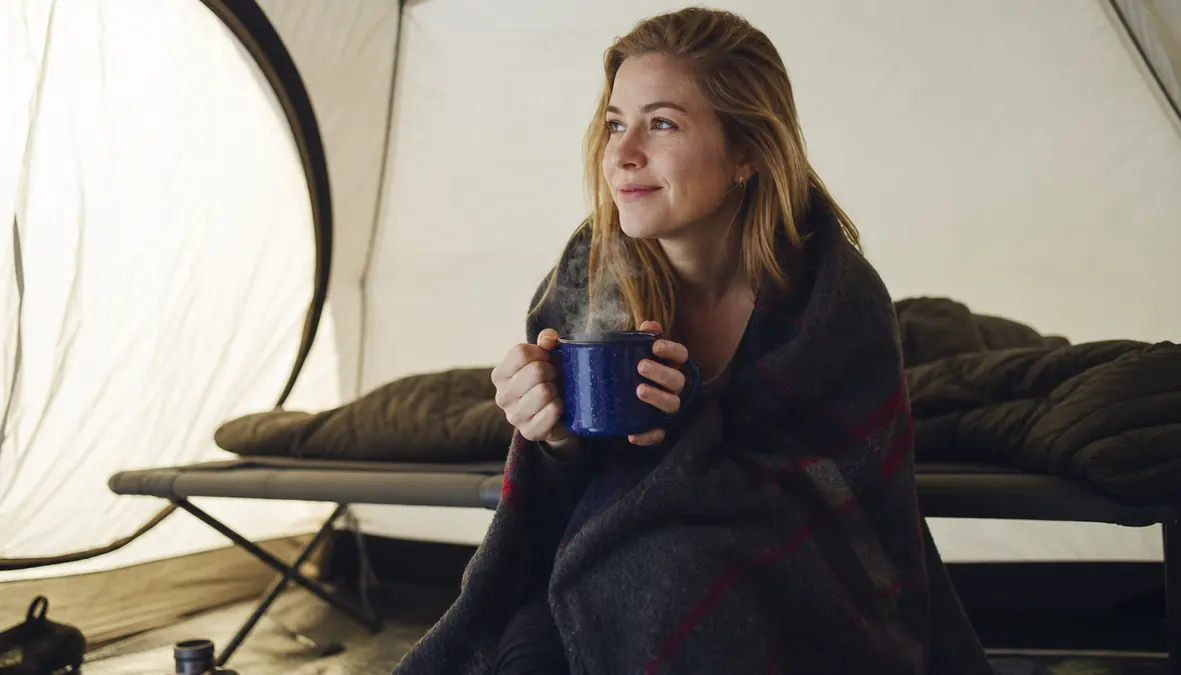
The bag and the cot can only do so much if you climb in already cold. I change into dry base layers right before bed, never the ones I hiked or cooked dinner in, because even a little dampness pulls heat fast. A knit hat is non-negotiable for me below 40 degrees, since a real amount of heat loss happens through your head, and a hot water bottle dropped into the foot of the bag twenty minutes before I get in makes the whole bag feel warm the second I climb inside.
Feet are usually the first thing to go cold on a cot, since they're farthest from your core and get the least benefit from body heat moving around inside the bag. A dry pair of wool socks, one size looser than what I'd wear hiking, makes more difference than almost any other single item I pack. Tight socks restrict blood flow and actually make cold feet worse, which is the opposite of what you'd expect walking into it.
None of this fixes a cold night by itself. It's the combination, foam pad down, bag matched to real conditions instead of the tag, wind blocked underneath, dry layers on your own body, that actually gets you a warm night on a camping cot instead of a cold one.
What Else Helps
A couple of smaller things round this out. Cotton kills, as the old saying goes, so I keep cotton socks and shirts out of my sleep layers entirely and stick to wool or synthetic. I also keep a small battery lantern within reach instead of getting up and losing whatever warmth I've built up in the bag just to find a headlamp. And I check the straps and frame on the ABORON cot before every cold trip, because a cot that's sagging in the middle lets more of your body sink toward the cold air below than a cot that's pulled taut.
I've also started packing one extra wool blanket on any trip where the forecast even mentions a chance of dropping below 35, regardless of how confident I am in the rest of the setup. Forecasts miss low overnight temperatures more often than people expect, especially at campsites tucked into valleys or near water, and a spare blanket folded at the foot of the ABORON cot weighs almost nothing in the car but has saved more than one night that started colder than predicted.
If you're still weighing whether a cot is even the right call for your setup compared to sleeping closer to the ground, that's covered in more depth in The Honest ABORON Camping Cot Review, including where I think it genuinely falls short. But if warmth on a cot is the specific problem you're solving, the five steps above are the whole answer. I've run this routine through nights well into the 20s at car campsites and stayed warm every time, and it's a lot cheaper than it sounds.
The cot was never the problem. The six inches of open air underneath it was.
Get the stable base this whole routine depends on
None of these five steps work without a cot wide and stable enough to hold a real insulation stack. That's the whole reason I run the ABORON XXL for cold-weather trips. Check today's price on Amazon before your next cold night out.
Amazon Check Today's Price on Amazon →