
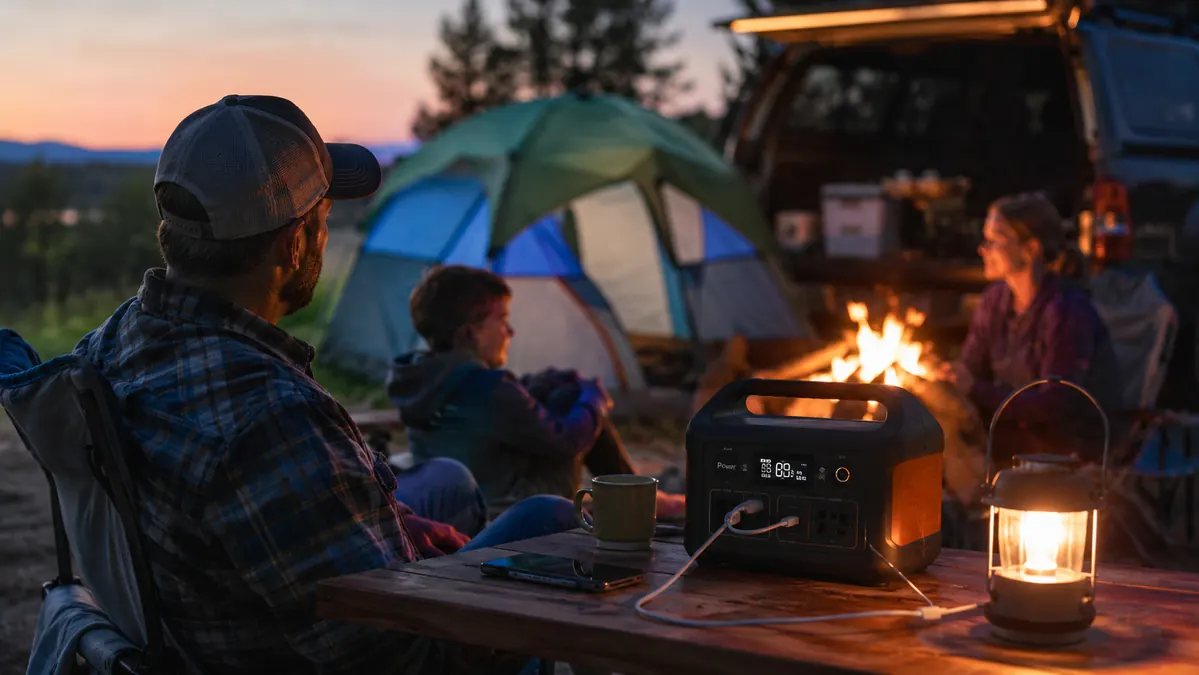
I've had a gas generator sitting under a tarp at three different campsites, and every time I ended up wishing I'd left it home. Somewhere around my fourth season of family car camping I swapped that generator for a portable power station, an Anker 521, and the difference showed up faster than I expected. This isn't a lab test, it's what changed after real nights outside, running lights, phones, and a cooler at sites from the Ozarks to the Gulf Coast.
A gas generator will always out-muscle a power station on raw watts. If you need to run a table saw, a window air conditioner, or a full-size RV rig, a generator still wins that fight. For everything else at a family site, a battery-based power station like the Anker 521 covers more of what matters and skips most of what doesn't. I go into the day to day details in my full season review of the Anker 521, but here are the ten reasons I made the switch and haven't looked back.
Tired of Hauling Gas Cans to Camp? See What the Anker 521 Runs Without Them
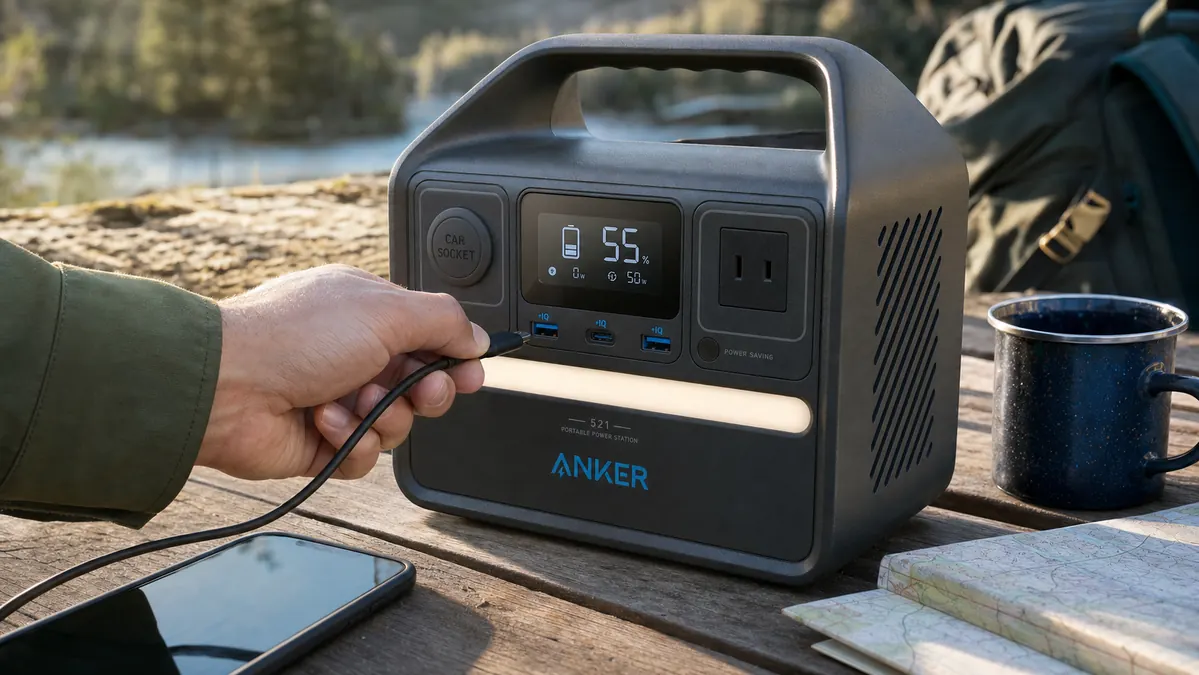
The Anker 521 packs a 256 watt-hour LiFePO4 battery into a case about the size of a lunch cooler, no fuel, no fumes, no pull cord. Check today's price and see if it covers your setup.
Amazon Check Today's Price on Amazon →No Exhaust Fumes to Worry About
A gas generator burns fuel, and that means carbon monoxide, plain and simple. I've seen the warning stickers on rental cabins about running generators too close to a window, and I've heard the stories about campers who didn't take that seriously. The Anker 521 doesn't burn anything. It's a sealed LiFePO4 battery pack, so there's no exhaust to manage and no minimum safe distance to calculate before I set it down next to the tent.
Nothing to Spill in the Truck Bed
I used to keep a one-gallon gas can rattling around in the truck bed on every trip, and it always found a way to smell up the cooler or leave a faint film on whatever was sitting next to it. The Anker 521 charges off a wall outlet at home or a solar panel at the site, so there's no fuel to carry, store between trips, or worry about going stale over the off-season.
Actually Quiet at 10pm
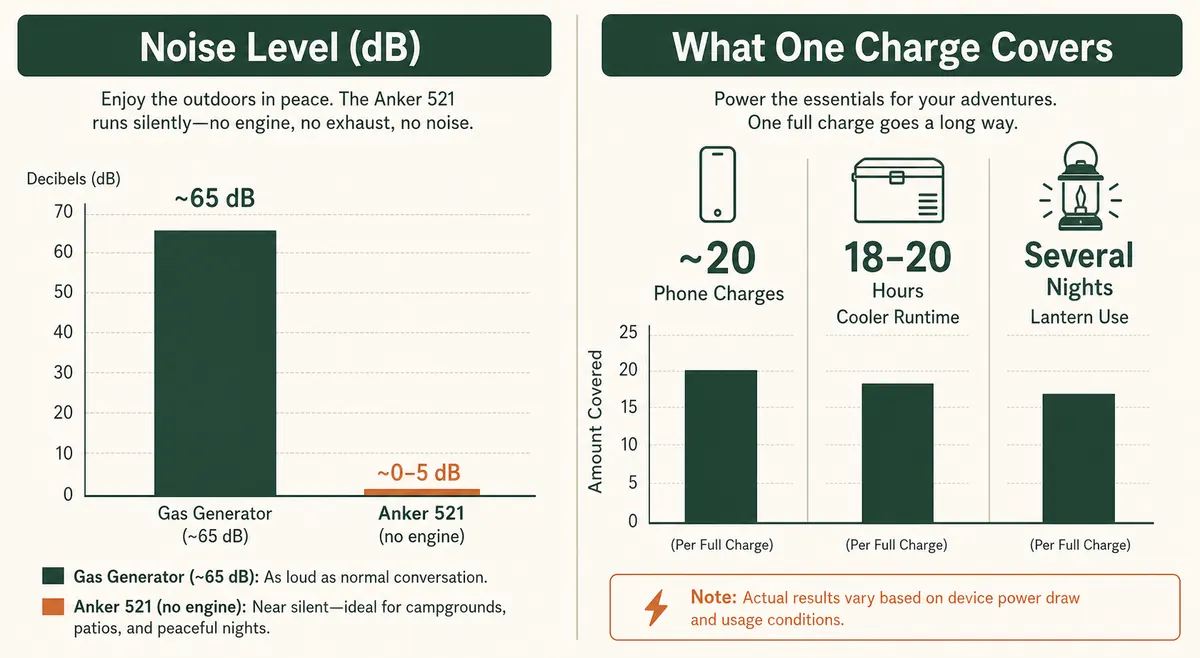
Most gas generators sit somewhere between 60 and 70 decibels, which is loud enough to draw dirty looks from the next site over and get you an actual visit from a campground host during quiet hours. The Anker 521 has no engine, so running it at night to keep a lantern or a phone charger going adds no more noise than the crickets were already making.
No Pull Cord, No Choke, No Priming
Cold mornings are the worst time to fight with a generator that won't start on the first three pulls. The Anker 521 turns on with a button. I've used it in temperatures cold enough that I was wearing gloves, and it came on the same way it does in July.
Recharges From More Than One Source
A gas generator only runs on gas. The Anker 521 will take a charge from a wall outlet before I leave the driveway, from a car's 12V outlet on the drive up, or from a compatible solar panel if I'm parked somewhere sunny for a few days. That flexibility has saved a couple of trips where I forgot to top it off the night before.
Light Enough to Move Without a Hand Truck
At right around 11 pounds, the Anker 521 rides in one hand from the truck to the picnic table. My old generator needed two hands and a dolly, and once it was down it mostly stayed down for the whole weekend because moving it again wasn't worth the hassle.
No Generator-Hour Restrictions to Plan Around
A lot of public campgrounds and some private ones post specific hours when gas generators are allowed to run, usually a window in the morning and another in the evening. A battery power station doesn't fall under those rules because it isn't combustion equipment, so the Anker 521 keeps running whenever I actually need it, including the middle of the night if a fan or a CPAP machine needs power.
Safe to Keep Close to the Tent
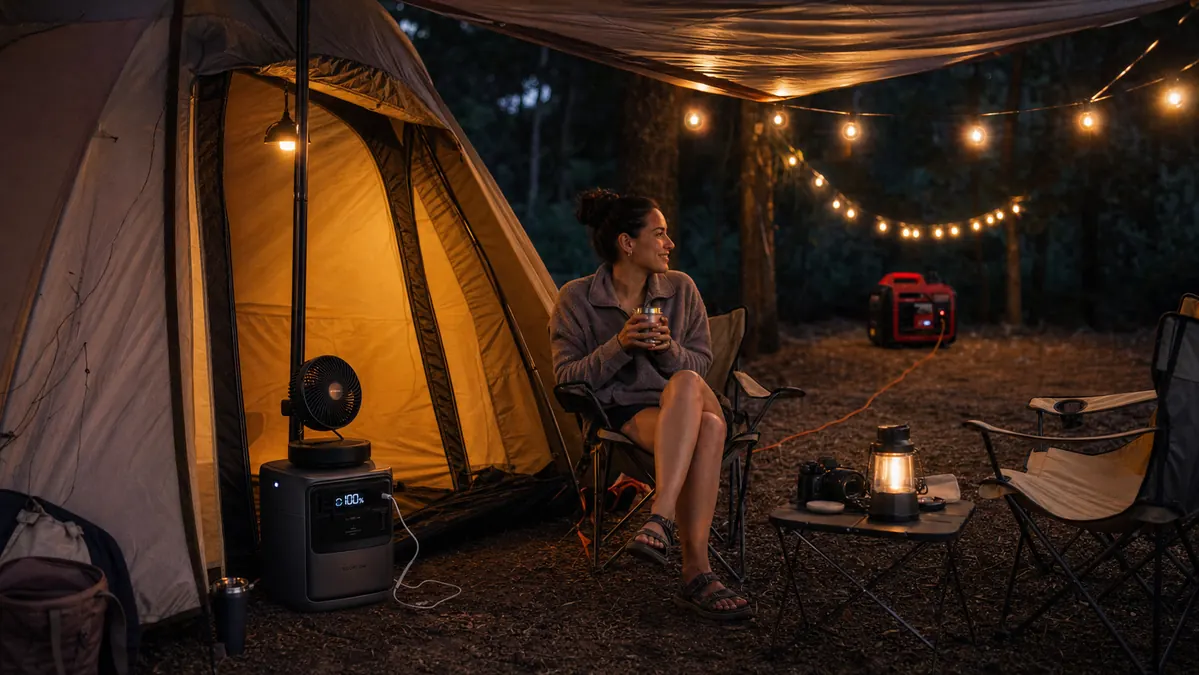
Generator manufacturers are clear that their units need to run a good distance from any enclosed space because of carbon monoxide. That means running an extension cord across the site and hoping nobody trips on it in the dark. The Anker 521 can sit right in the vestibule or under the awning next to me, since there's no exhaust risk to manage.
Lower Cost Over a Season of Trips
Gas isn't free, and neither is the oil change and carburetor cleaning a small generator needs after it sits for a few months between trips. The Anker 521 has no ongoing fuel cost. I plug it in at home before a trip and that's the entire maintenance routine. Over a full camping season that adds up to real savings, even before counting the time I'm not spending at a gas station with a can in the truck bed. If you're deciding between capacity classes, I broke down the Anker 521 against a smaller unit in my comparison of the Anker 521 vs. Jackery Explorer 300.
Covers What a Family Site Actually Needs
In one full charge, the Anker 521's 256 watt-hours keeps my phone topped off for close to three weeks of normal use, runs a small camp lantern for several nights, and kept a 40-quart cooler running for around 18 to 20 hours on a single charge in my own testing. That covers phones, a headlamp charger, a fan, a CPAP machine for a night or two, and small camp lighting. It will not run a window air conditioner, a full-size RV, or power tools the way a generator can, and I don't pretend otherwise. For a weekend family site, it's covered nearly everything I've actually asked of it.
What I'd Skip
I wouldn't buy a portable power station expecting it to replace a generator on a trip where I actually need high-draw equipment, like running a window AC unit in a pop-up camper through a heat wave, or powering tools at a work site. If that's the real use case, a generator is still the right tool. I'd also skip the smallest power stations under 200 watt-hours if there's more than one person's devices to keep charged, since that capacity disappears fast once a cooler or a CPAP is added into the mix. For a family car-camping setup where the big draws are lights, phones, and a cooler, a unit like the Anker 521 in the 256Wh class has been the better fit every time I've compared the two. I go through how to match a power station to your actual gear list in a separate walkthrough on keeping devices charged at camp with a power station.
The night I realized I hadn't thought about carbon monoxide once all weekend was the night I knew I wasn't going back to a gas generator.
Ready to Stop Hauling Gas Cans to Camp?
The Anker 521 has covered every weekend trip I've taken it on, phones, lanterns, a cooler, and more, without a drop of gas or a pull cord in sight. I get into the downsides too in my honest Anker 521 review, but see today's price on Amazon and check it against your own gear list.
Amazon Check Today's Price on Amazon →