

Every camping cot review site says pretty much the same thing: best sleep I've ever had outdoors, five stars, buy it before the price goes up. I've read a stack of those about the ABORON XXL cot, and most of the praise is fair enough. But there's a version of this cot's story that doesn't make it into those glowing writeups, the parts that only show up after you've packed it, unpacked it, and dragged it across a rough pad a few dozen times. This is the honest version, the one that leans into what actually goes wrong, not just what goes right, because a reader deciding whether to spend real money deserves both sides, not just the highlight reel.
I bought the ABORON cot for a plain reason: an old basketball injury makes getting up off the ground miserable some mornings, and I wanted something sturdier than the thin folding cot I'd dragged around for two summers before it. My camping buddy Silas already had one and swore by it, so I ordered mine without much research beyond his word and a scroll through the star ratings. That's usually how these purchases go, and it's exactly why a review like this one matters more than another list of glowing bullet points repeating each other. I've since put my own cot through enough nights, loans, and rough campsites to have opinions Silas never mentioned.
The Quick Verdict
A solidly built cot for the money, but the marketing glosses over real quirks: it squeaks, it needs genuinely level ground, and the tool-free setup eventually needs an actual tool.
Amazon Check Today's Price →Before You Add This to Cart, Read What the Five-Star Reviews Skip
The ABORON XXL cot is a genuinely capable camping cot, it's just not the flawless upgrade the product photos suggest. See today's price and the full picture before you decide.
Amazon Check Today's Price on Amazon →What the Setup Photos Don't Show You
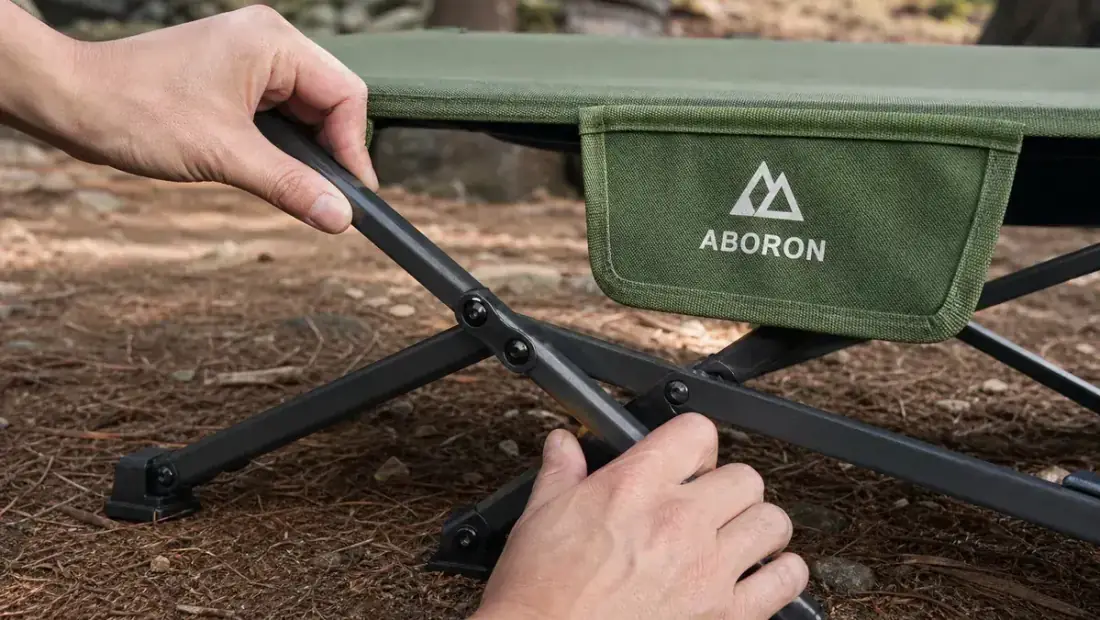
The push-button, tool-free assembly gets marketed as effortless, and mechanically it is, but nobody warns you about the pinch point where the crossed legs meet. On my second setup I got a little careless and caught a fold of skin between the hinge plates hard enough to leave a bruise for a week. It's not a design flaw exactly, most X-frame cots work this way, but the ABORON listing photos make it look like a two-second unfold with zero risk, and that's just not the full picture once you're the one doing it in low light with cold hands and a headlamp battery that's already half dead.
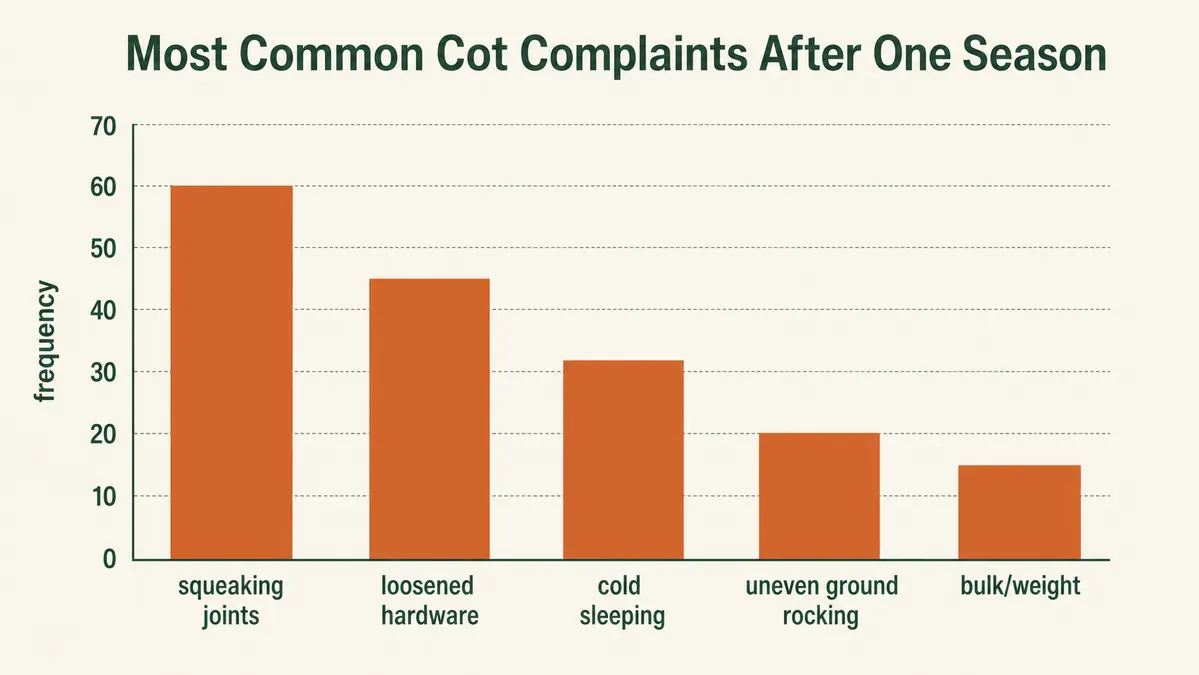
Ground condition matters more than any review mentions upfront. I set this cot up on a dispersed site in a national forest one weekend, a spot with roots and half-buried rocks instead of a groomed pad, and the cot rocked every time I shifted my weight. A foam sleeping pad just conforms to that kind of ground. A rigid steel-framed cot does not, and you end up hunting for flat dirt or stacking small rocks under a short leg to stop the wobble, which is not the relaxed camp setup the marketing implies. It took me nearly fifteen minutes of shimming that first night before the cot sat still enough to trust.
The height off the ground also changes how your tent needs to be sized, in a way that never comes up in the spec sheet. In a smaller dome tent with sloped walls, I sat up out of habit one morning and cracked my head on the ceiling fabric because the cot puts you a good foot higher than sleeping on the tent floor would. It's a small thing, but it's exactly the kind of detail that only shows up once you're actually using the ABORON cot instead of reading about it, and it's the reason I now check a tent's peak height before assuming this cot will fit comfortably inside it.
The Sounds and Small Failures Nobody Mentions
By the second month of regular use, the ABORON developed a faint squeak at the pivot joints, worse after a trip where I packed it away still damp from morning dew. A drop of light oil on the hinge points quieted it back down, but that's maintenance nobody tells you to expect on a cot marketed as rugged and simple. If you're the type who wants to buy gear and never think about it again, this is the first sign that isn't quite true here, and it's worth packing a small multi-tool and a travel-size bottle of oil if you plan on keeping this cot for more than a season.
The tool-free setup claim also stops being entirely accurate after a season of folding and unfolding. The push-button pins that lock the legs began sitting looser by midsummer, enough that I ended up snugging the connecting bolts with a small wrench I now keep in my camp box specifically for this cot. It's a five-minute fix, and it's not a dealbreaker, but calling a cot tool-free and then quietly needing a tool six weeks in is exactly the kind of gap between the listing and the reality that this review exists to point out.
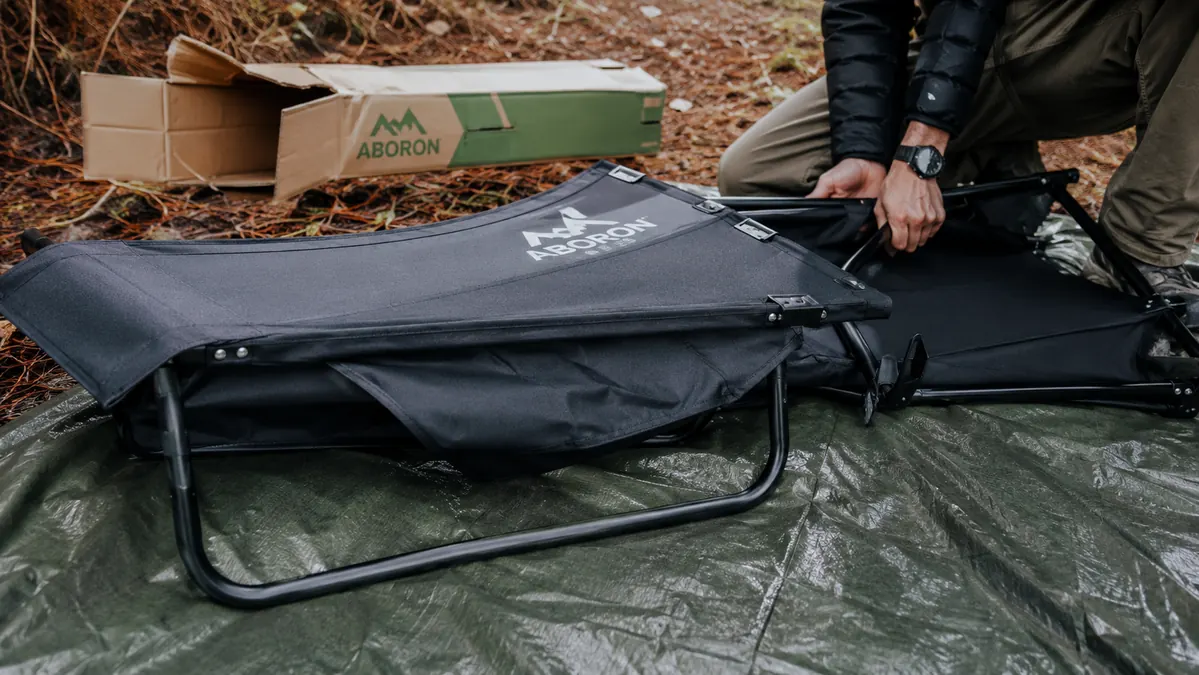
One more thing worth flagging honestly: mine arrived with a slightly bent leg tube out of the box, easy to miss if you don't lay the cot out fully before your first trip. I caught it in the driveway, not at a campsite an hour from cell service, and Amazon replaced it without a fight. Check every leg tube against a flat surface the day it arrives. Assuming a folding cot is fine just because the box wasn't crushed is how people end up finding out the hard way at 9 p.m. in a dark parking lot, fumbling with a cot that won't sit flat and no daylight left to sort it out.
Comfort Once the Novelty Wears Off
The first two nights on the ABORON were less comfortable than I expected, not because the cot is bad, but because sleeping a foot off the ground feels genuinely different from a pad, and your body takes a night or two to stop noticing the height and the slight give of the fabric under you. Most reviews skip straight to how great it feels, which undersells the adjustment period for anyone switching from ground sleeping for the first time. By the third night I'd stopped noticing it entirely, but that adjustment period is real and worth planning for on a short trip.
Nobody mentions the noise, either. The fabric top crinkles audibly every time you shift position, and in a quiet tent that sound carries. On night three my tentmate woke up annoyed after I'd rolled over for what he swore was the tenth time, and he wasn't wrong that it was loud enough to notice. If you're a restless sleeper sharing a tent, this is worth knowing before you buy, not after, because there's no quiet way to adjust yourself on this cot once everyone else has drifted off.
In a smaller tent, the cot's height and width mean the fabric wall sits close enough that condensation on the tent's interior can drip directly onto a corner of the cot overnight. It happened to me once on a humid morning and left a damp patch I didn't notice until I sat down. It's a minor annoyance, but it's the kind of real-world detail that a five-star bullet list never gets into, and it's easily solved by pitching the cot a few inches away from the tent wall once you know to look for it.
To Be Fair, Here's What Actually Held Up
I don't want this to read like the ABORON is a bad cot, because it isn't. The frame itself has taken genuine abuse without complaint. A gust knocked a loaded camp chair sideways into it one evening hard enough to shove the whole cot a few inches, and nothing bent or cracked. The fabric shrugged that off completely, and the legs stayed square afterward, which is more than I can say for the cheaper cot it replaced.
The width is also the real deal. At 32 inches across, it's noticeably roomier than the narrow backpacking-style cot I used before, and I've never once felt like I was going to roll off in my sleep, which was a constant low-grade worry on my old setup. The underside storage space for boots and a headlamp is genuinely useful too, small thing, but it adds up over a season of trips where every bit of organization at a cramped campsite matters more than it sounds like it should.
Tradeoffs That Almost Made Me Return It
The irony of buying this cot for a bad knee is that the cot itself is a workout to haul and fold. At close to 20 pounds and nearly 40 inches folded, lifting it in and out of a truck bed repeatedly isn't nothing, and there were mornings breaking camp that my knee complained about the cot almost as much as it complains about the ground. If mobility is the reason you're considering the ABORON in the first place, weigh that tradeoff honestly before you commit to it.
Getting in and out at 2 a.m. for a bathroom run is clumsier than it sounds. The cot sits high enough that you're stepping down onto tent floor rather than just standing up off it, and I caught my foot on a frame edge in the dark once and nearly went down. A sleeping pad doesn't have an edge to catch a foot on. This is a small but real tradeoff for anyone who gets up in the night more than once, which most of us do more often than we'd like to admit.
The cold sleeping issue is real too, and it's worse than a quick mention in a spec sheet suggests. Even on a mild night in the low 50s, I noticed a distinct draft moving under my back that a ground pad simply doesn't let happen, since ground blocks that airflow entirely. I've since worked out a fix for that, which I detail in this guide to sleeping warm on a camping cot, but out of the box, plan on needing an insulating layer sooner than you'd expect, even outside of what most people would call cold-weather camping.
What I'd Consider Instead If I Were Buying Again
If the squeaking and the ground-leveling hassle had been dealbreakers, the honest alternative for me would have been a thicker insulated sleeping pad paired with a simple foam layer underneath, since that setup conforms to rough ground instead of fighting it. It's a completely different feel, softer and quieter, but you lose the storage space underneath and the feeling of being fully off the dirt, which is genuinely what sold me on a cot in the first place and why I haven't actually gone back to a pad since.
I also looked briefly at a lower-profile cot style that sits closer to the ground, which in hindsight would have solved both the ceiling-clearance issue in smaller tents and the awkward middle-of-the-night dismount. It's a real tradeoff worth weighing before you buy, and I go through the full case for a cot versus a pad more directly in this comparison and in why cots tend to win out for most car campers anyway, squeaks and all, since the tradeoffs mostly come down to your specific tent and campsite habits.
What I Liked
- Steel frame genuinely holds up to real abuse, including a chair getting knocked into it
- 32-inch width means you actually stay on the cot all night without feeling boxed in
- Underside storage for boots and small gear is a real, everyday convenience
- Handles larger and heavier campers without complaint
Where It Falls Short
- Tool-free setup pins loosen after a season and eventually need an actual wrench
- Develops a squeak at the pivot joints that shouldn't show up this early
- Needs genuinely level ground or it rocks noticeably
- Fabric top crinkles loudly enough at night to wake a tentmate
- Extra height off the ground makes nighttime bathroom trips clumsier than a pad
Nobody puts 'wakes up your tentmate every time you roll over' in the bullet points, but that's exactly what happened on night three.
Who This Is For
If you camp on established, mostly level sites, drive to your campground instead of hiking in, and have a bigger frame or a bad knee that makes ground sleeping genuinely painful, the ABORON is worth the tradeoffs above. I've covered the full season of use, good and bad, in my longer long-term ABORON cot review if you want the complete picture beyond just the drawbacks covered here.
It's also a solid pick if you're the only one sleeping in your tent, since the noise complaint disappears entirely when there's nobody next to you to wake up. Solo car campers who value being off the ground more than they value dead silence at 3 a.m. will likely be happy with the ABORON, squeaky joints and all.
Who Should Skip It
Light sleepers sharing a tent with a partner who's easily woken should think twice, and so should anyone who camps regularly on rocky, root-heavy, or otherwise uneven dispersed sites where a rigid frame fights the terrain instead of conforming to it. If silence and simplicity matter more to you than being fully off the dirt, a sleeping pad is the more honest answer, and I lay out that exact tradeoff without any sales pitch in this cot versus pad comparison.
Still Think a Cot Beats the Ground? Here's the Straight Answer
Warts and all, the ABORON XXL held up to a season of real abuse and still earned its place in my gear list. Check today's price on Amazon before deciding if the tradeoffs work for your setup.
Amazon Check Today's Price on Amazon →